






Provincial Violence Prevention Curriculum eLearning Refresh

Working closely with our union and employer partners, SWITCH BC has updated the Provincial Violence Prevention Curriculum (PVPC) eLearning course. It is now live at Island Health for new health care workers. It’s a 3.5-hour online course for all workers in the health sector and incorporates best practices and training levels necessary for different roles, occupations, and environments.

The curriculum supports the safety of all people working in healthcare by helping prevent violent incidents and gives workers tools to better protect themselves and others from violence in the workplace.

The PVPC for Physicians eLearning course is also complete. Facilitator-led, classroom training for health care workers, based on roles and risks, and physicians, is being updated with a planned completion in 2026.

https://switchbc.ca/wp-content/uploads/2023/01/PVPC-header2-new-crop.jpeg
/wp-content/themes/switchbc/images/purple-hex.png
Funding for this initiative was provided by the Ministry of Health.

Trauma-Informed Practice (TIP) Poster

https://switchbc.ca/wp-content/uploads/2023/01/PVPC-Microlearnings-Poster-Trauma-Informed-Practice-feature.png
Updated violence prevention training includes learning about TIP. Review these prompts on how to apply TIP at work.

PVPC eLearning Refresh Poster

https://switchbc.ca/wp-content/uploads/2023/01/waiting-room-scaled.png
Check out the key updates of the Provincial Violence Prevention eLearning Curriculum and download the poster.

PVPC eLearning Journeys

https://switchbc.ca/wp-content/uploads/2023/01/poloraid-journeys.png
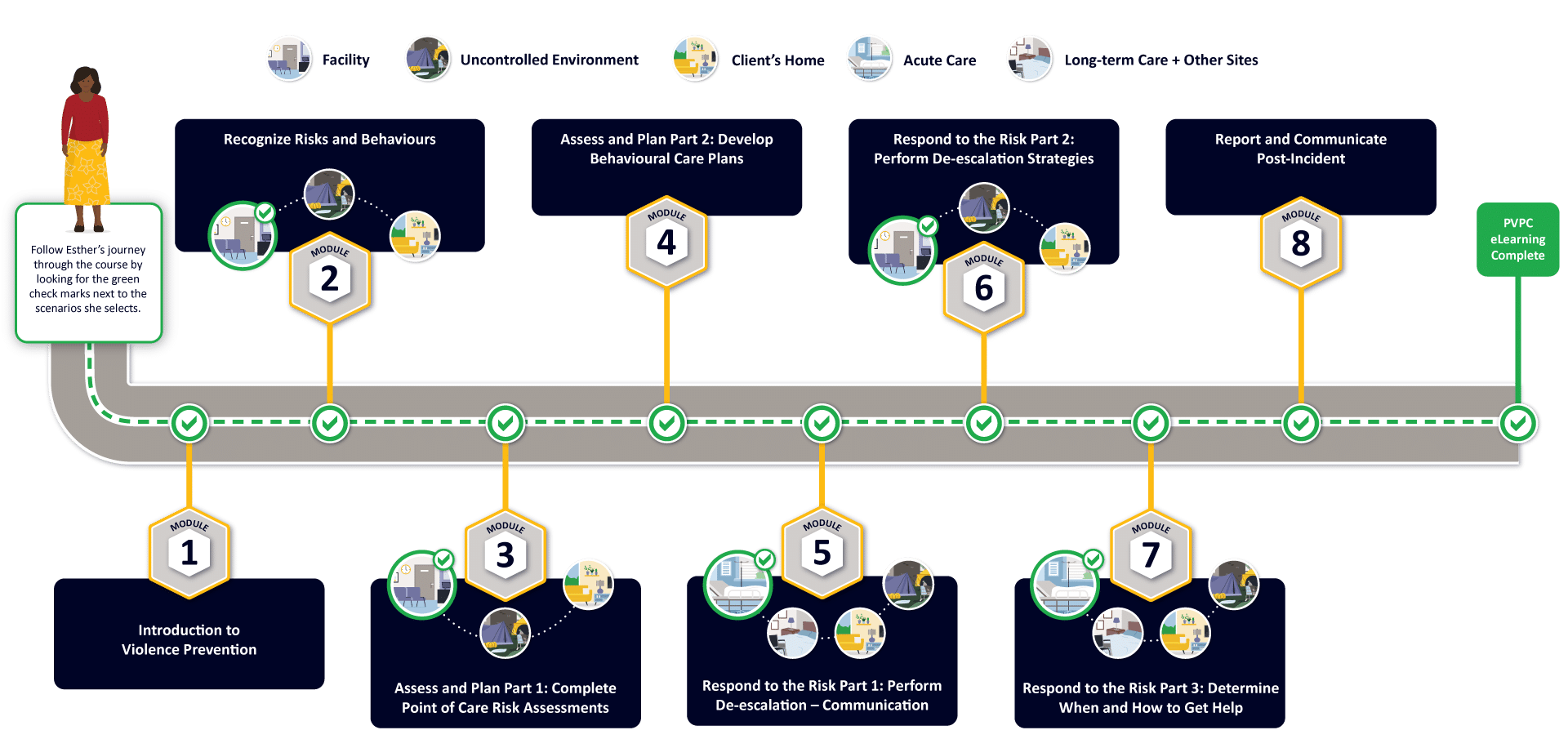
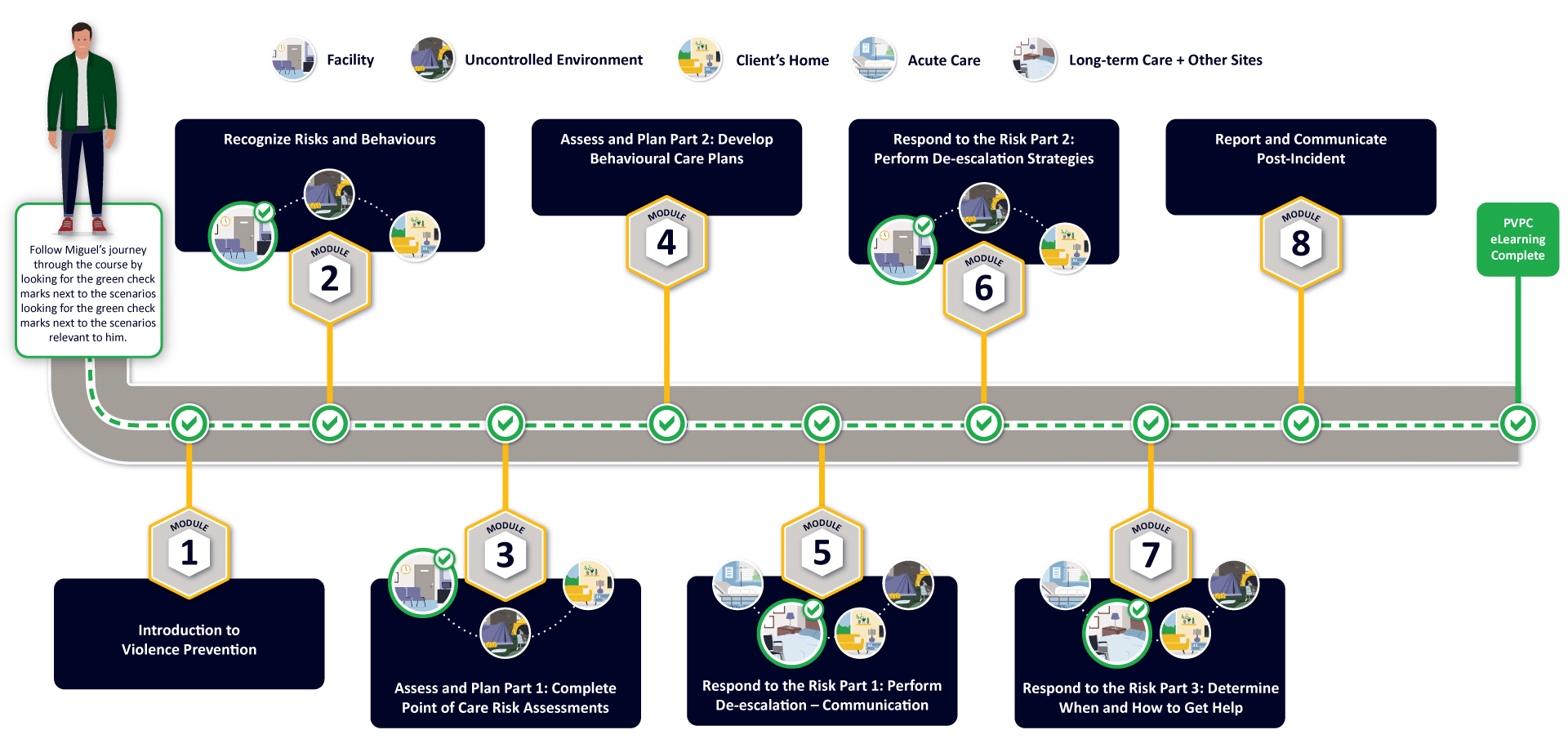
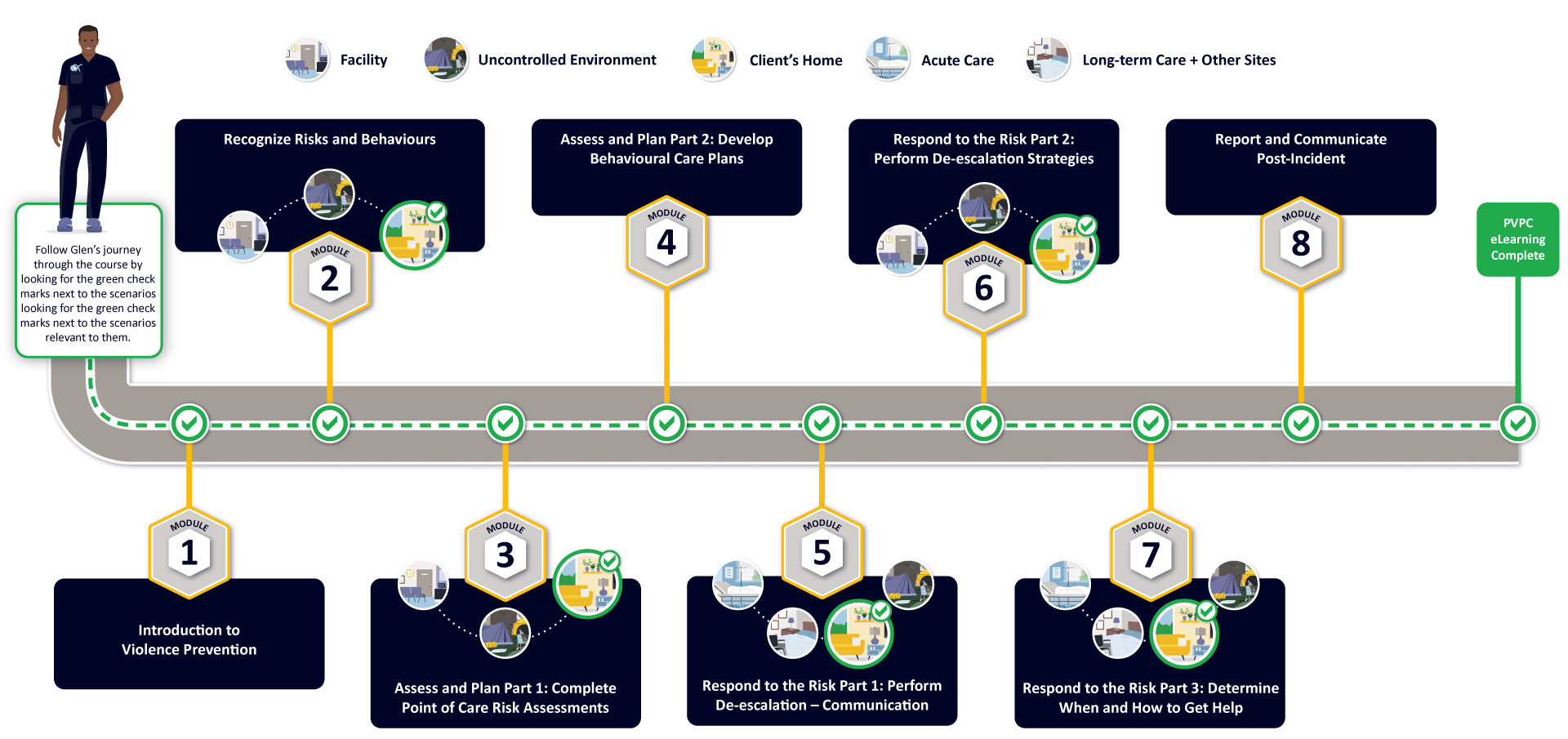
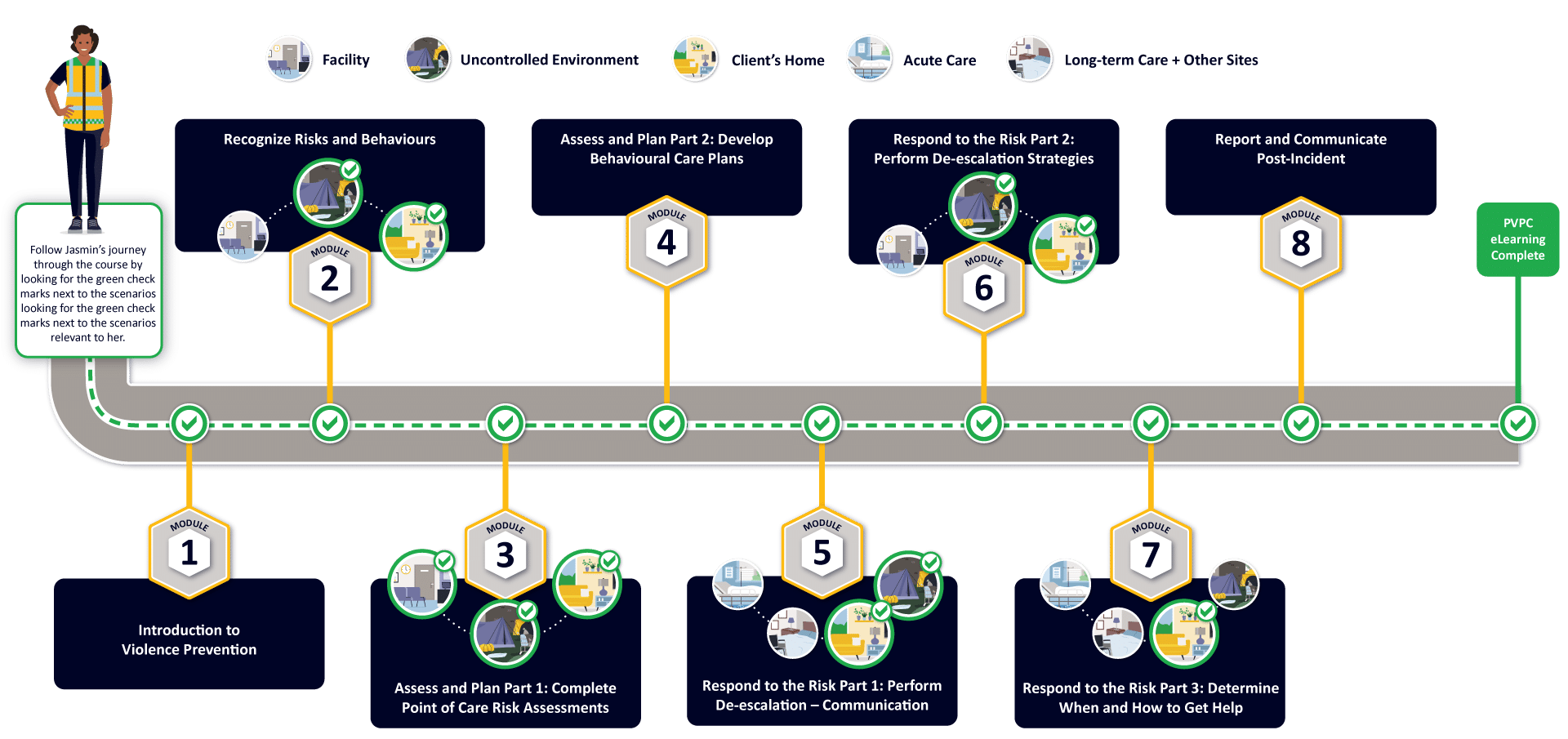
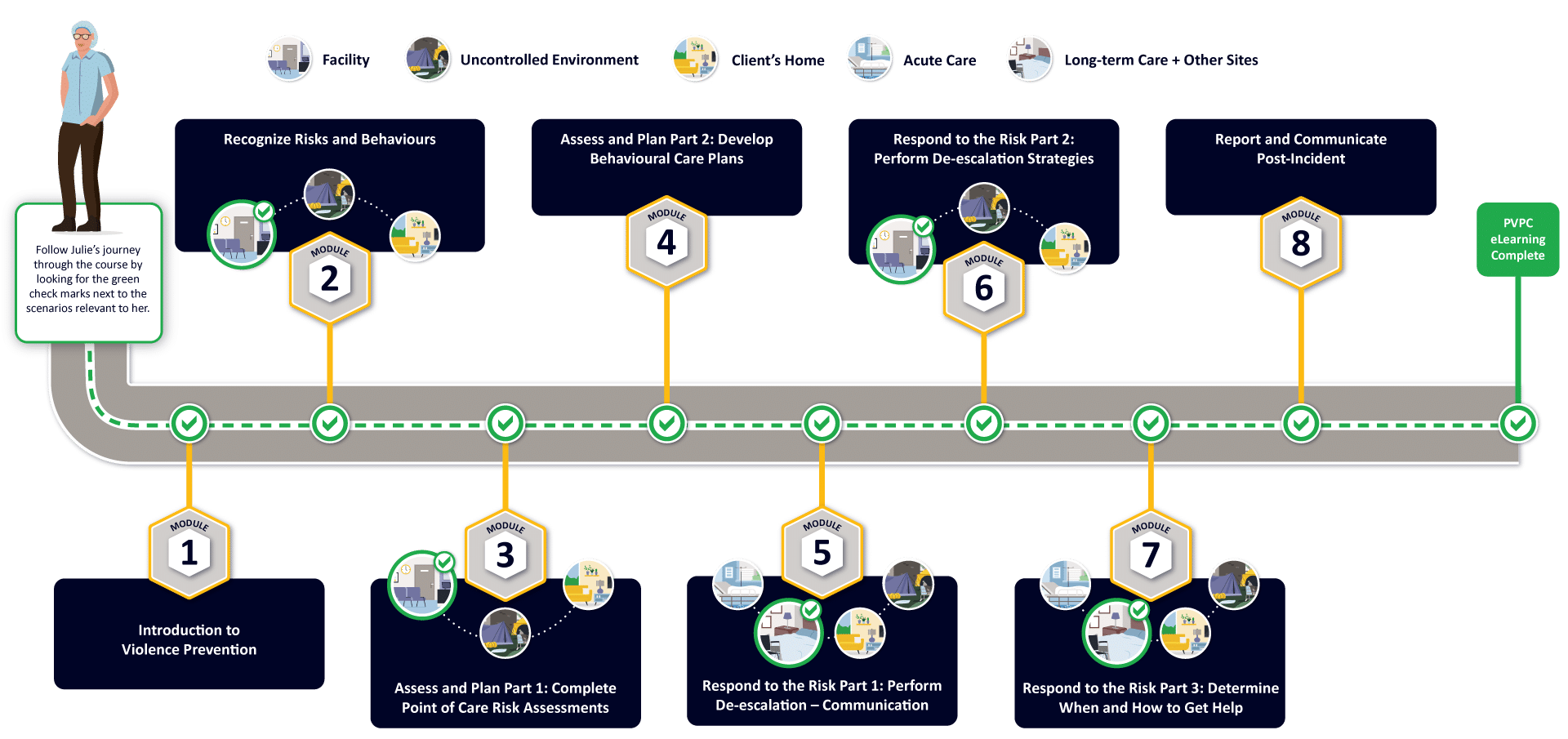
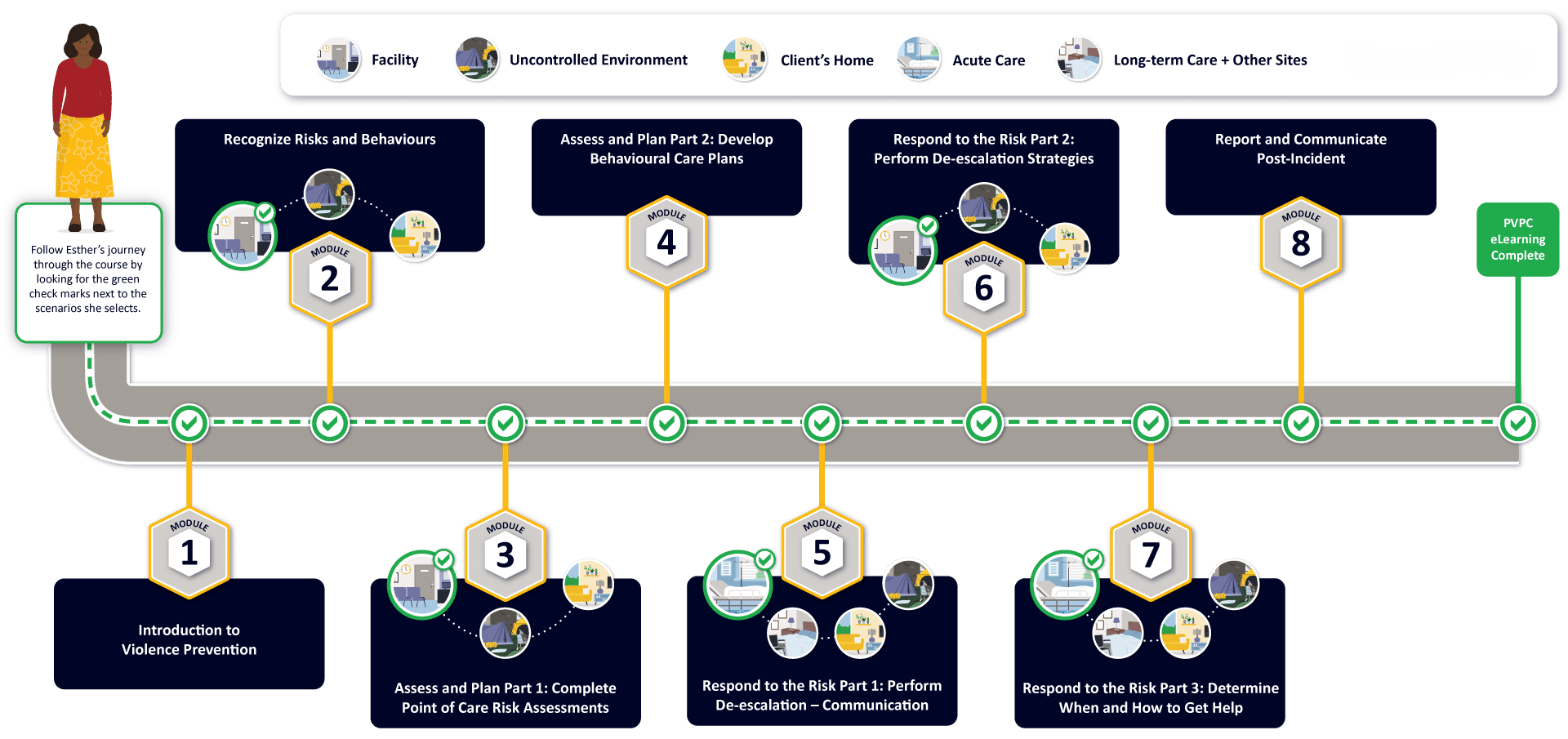
Check out learning journey roadmaps of the refreshed Provincial Violence Prevention Curriculum for workers in the healthcare sector.

What We Learned

https://switchbc.ca/wp-content/uploads/2023/01/VP-1.jpg
We heard from nearly 1,300 people who work in healthcare in B.C. about violence prevention training and how to strengthen the program.

Microlearnings

We’ve created bite-sized learnings from the new violence prevention curriculum to use for health and safety conversations.

Use these microlearnings in:

  • Daily stand-up meetings
  • Team and/or manager meetings
  • Joint occupational health and safety committee meetings
  • Share posters in communal areas like staff rooms

Trauma-Informed Practice (TIP) Poster

Updated violence prevention training includes learning about trauma-informed practice (TIP). Review these prompts on how to apply TIP at work:

De-escalation Tools

Verbal abuse is not part of the job! Here are some tools you can use to help de-escalate verbal interactions with patients, family members, or members of the public. Watch, read, or listen to these scenarios so you are better prepared for challenging interactions.

Patients and families may feel frustrated if wait times for medical professionals are long. Here’s how to defuse the situation.

Collaboration Counter

All SWITCH BC initiatives are collaborations. Hundreds of hours have been invested by our partners to ensure the PVPC refresh will support violence prevention training for people working in B.C.’s healthcare system. To help ensure we made updates that support health workers in their real-world environments, we asked for their opinions through in-person and virtual meetings and surveys. Here’s a quick look at engagement that informed the updated PVPC:

Hexyellow@2x.png
1523

1,523 people advised the refresh

Hexblueberry@2x.png
110+

110+ types of jobs in healthcare

Hexgreen@2x.png
333

333 engagement opportunities

https://switchbc.ca/wp-content/uploads/2023/01/PVPChexagons-8.png

Refreshed violence prevention training

The updated curriculum is based on the PVPC framework that identifies four main responsibilities in preventing and protecting against violence in the workplace: Recognize Risks and Behaviours, Assess and Plan, Report and Communicate Post-Incident, and Respond to the Risk. It also includes point-of-care risk assessments, communication and de-escalation techniques, when and how to call for help, incident and near-miss reporting.

Indigenous Cultural Safety (ICS), Equity, Diversity, and Inclusion (EDI), and Trauma-Informed Practice (TIP) principles are introduced and woven throughout this course.

Additional updates:

  • Healthcare scenarios relevant for today.
  • Knowledge checks, myth-busting activities, and reflection exercises.
  • New accessibility features, including narrated presentations, closed captioning, playback speed control, and mobile compatibility, helping ensure learners can access and utilize the training in ways that meet their needs.

Scenarios and Additional Content

In the refreshed PVPC all participants learn the same core skills, while having the opportunity to choose to practice those skills in scenarios that most closely apply to their role and workplace; there is additional content related to creating behavioural care plans for participants in occupations that create, update, or use them. Some participants also receive additional content.

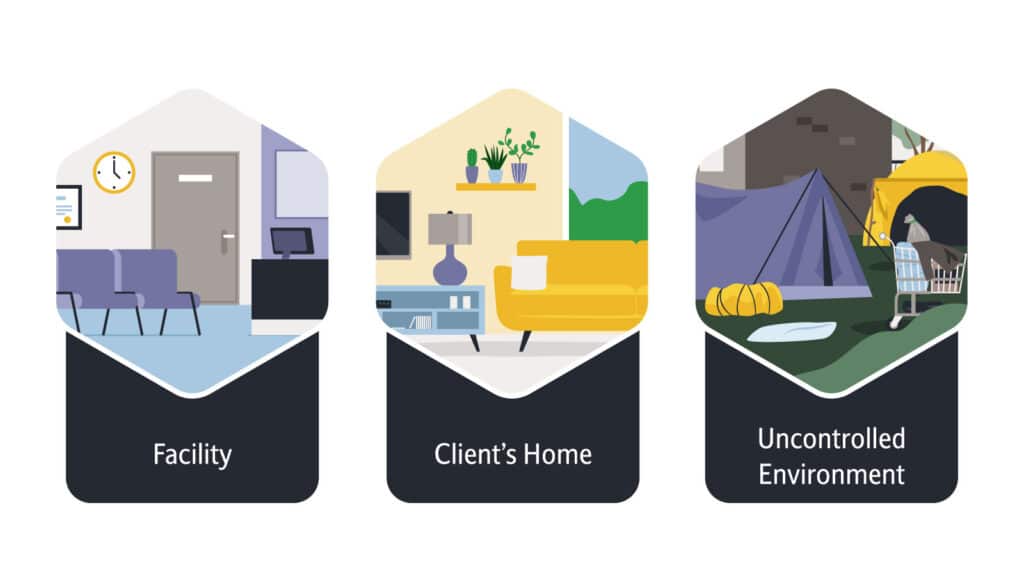
This course is designed for people in all healthcare workplaces, including hospitals and facilities, community and client homes, and long-term care.
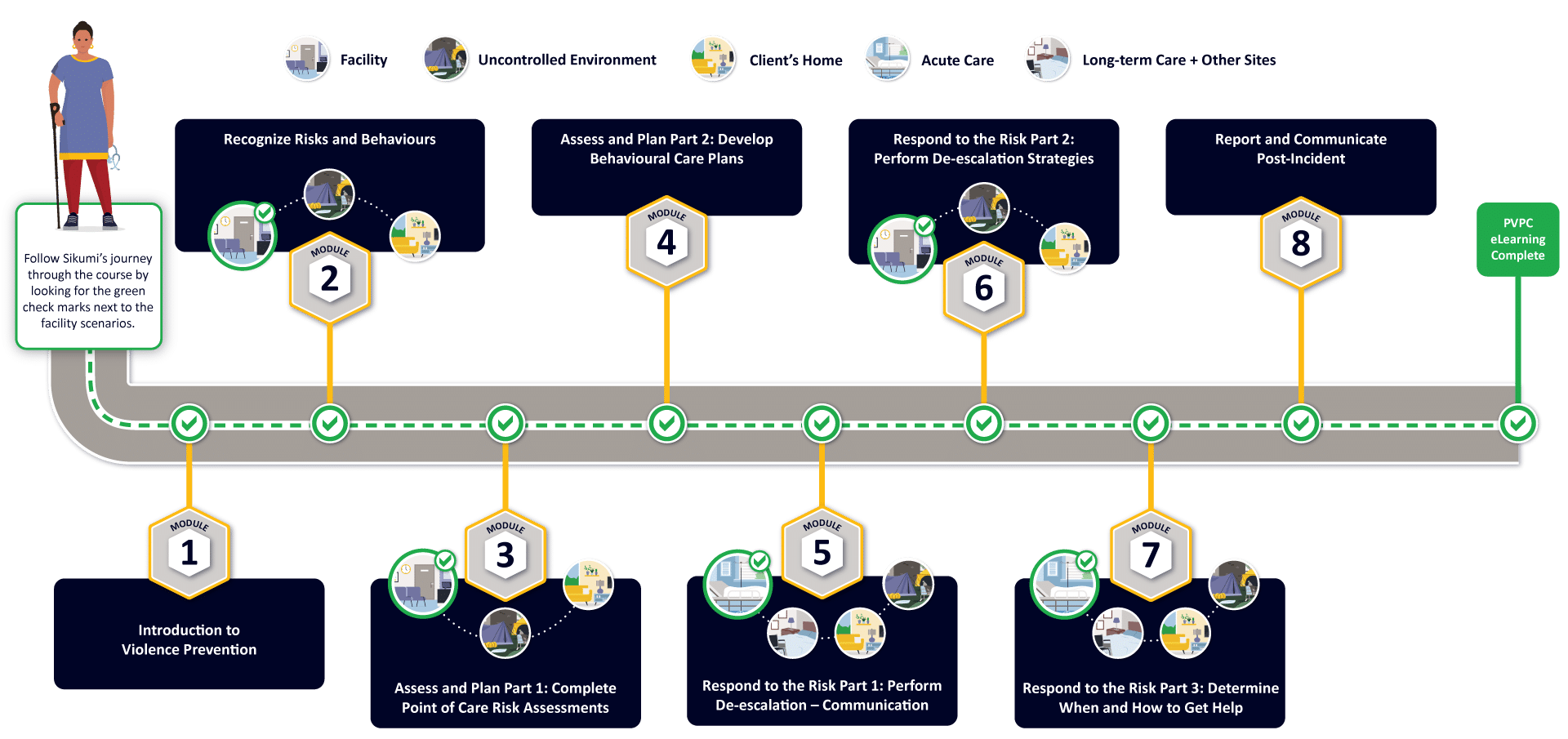
Refreshed PVPC eLearning Course Journey

In the refreshed eLearning course, all participants learn the same core skills, while having the opportunity to choose to practice those skills in scenarios that most closely apply to their role and workplace. Some participants also receive additional content. This course is designed for people in all healthcare workplaces, including hospitals and facilities, community and client homes, and long-term care.

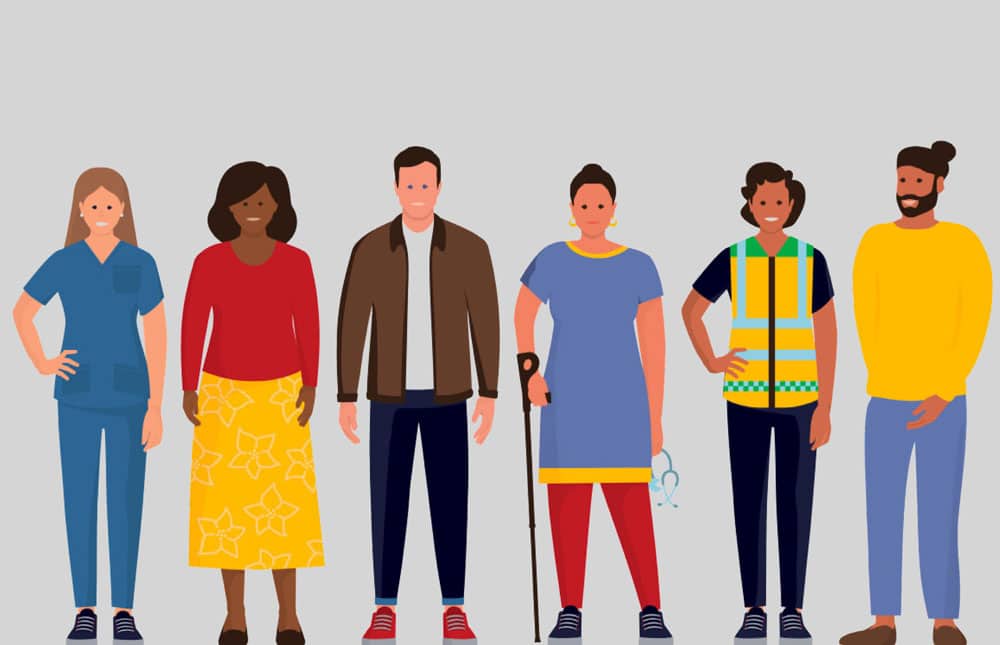
Click on each circular worker image to see their refreshed eLearning journey: 
https://switchbc.ca/wp-content/uploads/2023/01/PVPC-Course-Nurse-1.png
https://switchbc.ca/wp-content/uploads/2023/01/Administrative-Assistant-1.png
https://switchbc.ca/wp-content/uploads/2023/01/Care-aide-1.png
https://switchbc.ca/wp-content/uploads/2023/01/Home-Support-Worker-1.png
https://switchbc.ca/wp-content/uploads/2023/01/Paramedic-1.png
https://switchbc.ca/wp-content/uploads/2023/01/Food-Service-Worker-1.png

Frequently Asked Questions

  • What is the Provincial Violence Prevention Curriculum?

  • Why was the PVPC updated?

  • Who is required to take the PVPC?

  • If I have completed the older version of the PVPC, do I need to take the updated PVPC now?

  • Where do I take the updated course?

  • Has the curriculum changed?

  • How often will the PVPC be updated?

  • Have you also updated PVPC eLearning for physicians?

  • When will the updated facilitator-led curriculum be released?

  • Where can I learn more about the refreshed PVPC?

Interested in what else SWITCH BC is working on?

Learn more about the OHS Resource Centre