




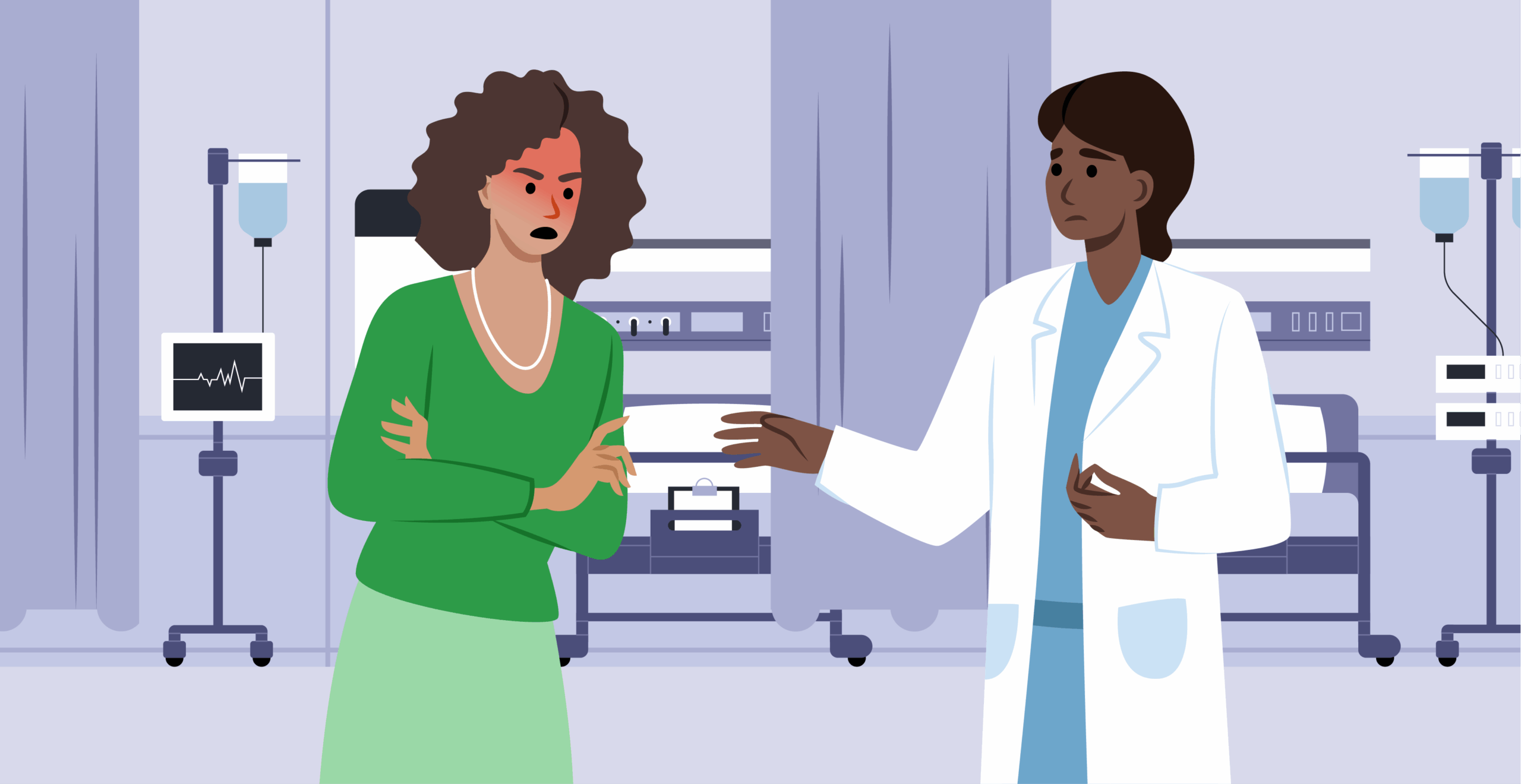


Co-developed by SWITCH BC, Doctors of BC, the Ministry of Health, and health authorities, the updated curriculum reflects the realities of clinical practice in acute and community care. It integrates Indigenous cultural safety, equity, diversity, and inclusion, and trauma-informed practice principles throughout.
The curriculum includes two components: 1.5-hour self-paced eLearning and 3.5-hour live, facilitator-led training, where participants practice their skills using realistic clinical scenarios.
The eLearning is an accredited self-assessment program approved by the Division of Continuing Professional Development UBC Faculty of Medicine.
Physicians, residents, and medical staff can access the training on LearningHub.
Accreditation Statement
The Division of Continuing Professional Development, University of British Columbia Faculty of Medicine (UBC CPD) is fully accredited by the Continuing Medical Education Accreditation Committee (CACME) to provide CPD credits for physicians. This activity is an Accredited Self-Assessment Program (Section 3) as defined by the Maintenance of Certification Program of the Royal College of Physicians and Surgeons of Canada, and approved by UBC CPD.
You may claim a maximum of 1.5 hours (credits are automatically calculated). This activity meets the certification criteria of the College of Family Physicians of Canada and has been certified by UBC CPD for up to 1.5 Mainpro+® Certified Activity credits. Each physician should claim only those credits accrued through participation in the activity.
SAP ID: 00019278
CFPC Session ID: 304022-001
This program was co-developed between Doctors of BC and Safety, Wellbeing, Innovation, Training & Collaboration in Healthcare (SWITCH BC) and was planned to achieve scientific integrity, objectivity and balance.
Who are “medical staff”?
Medical staff includes physicians, nurse practitioners, midwives, dentists, clinical scientists, and other practitioners who are authorized by a B.C. health authority to provide clinical services but are not employed by the health authority.
About the refreshed violence prevention training for physicians and medical staff
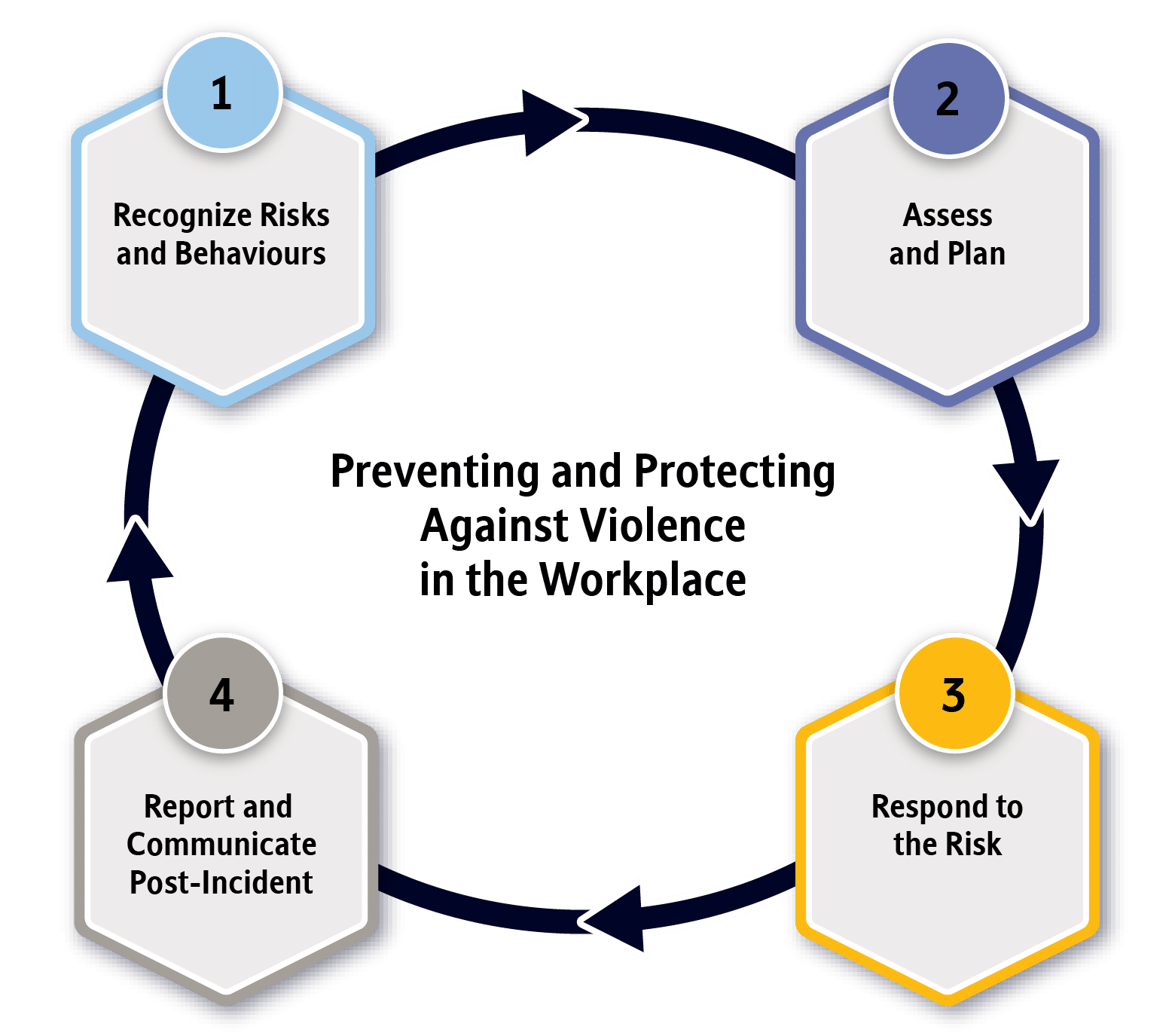
The updated curriculum reflects today’s clinical environments, current evidence, and leading practices in violence prevention. It is based on the PVPC Framework, which identifies four main responsibilities for preventing and responding to workplace violence.
The updated curriculum covers point-of-care risk assessment, communication and de-escalation techniques, when and how to call for help, incident and near-miss reporting, and how to continue the care relationship after a violent incident. Indigenous cultural safety, equity, diversity and inclusion, and trauma-informed practice principles are integrated throughout.
The facilitator-led training builds on the eLearning through live, interactive learning. Participants work through and practice realistic scenarios from acute and community care, building practical skills to recognize warning signs, assess risk, prevent escalation, and respond safely. Structured group debriefs help them reflect, consider different approaches and learn from one another.
Physicians and Medical Affairs leaders from across B.C. helped shape the updated curriculum through the Provincial Violence Prevention Working Group and Physician Advisory Group. Their input helped ensure the training reflects the realities of clinical practice and the situations physicians and medical staff encounter at work.
Frequently Asked Questions
What is the Provincial Violence Prevention Curriculum for Physicians/Medical Staff?
