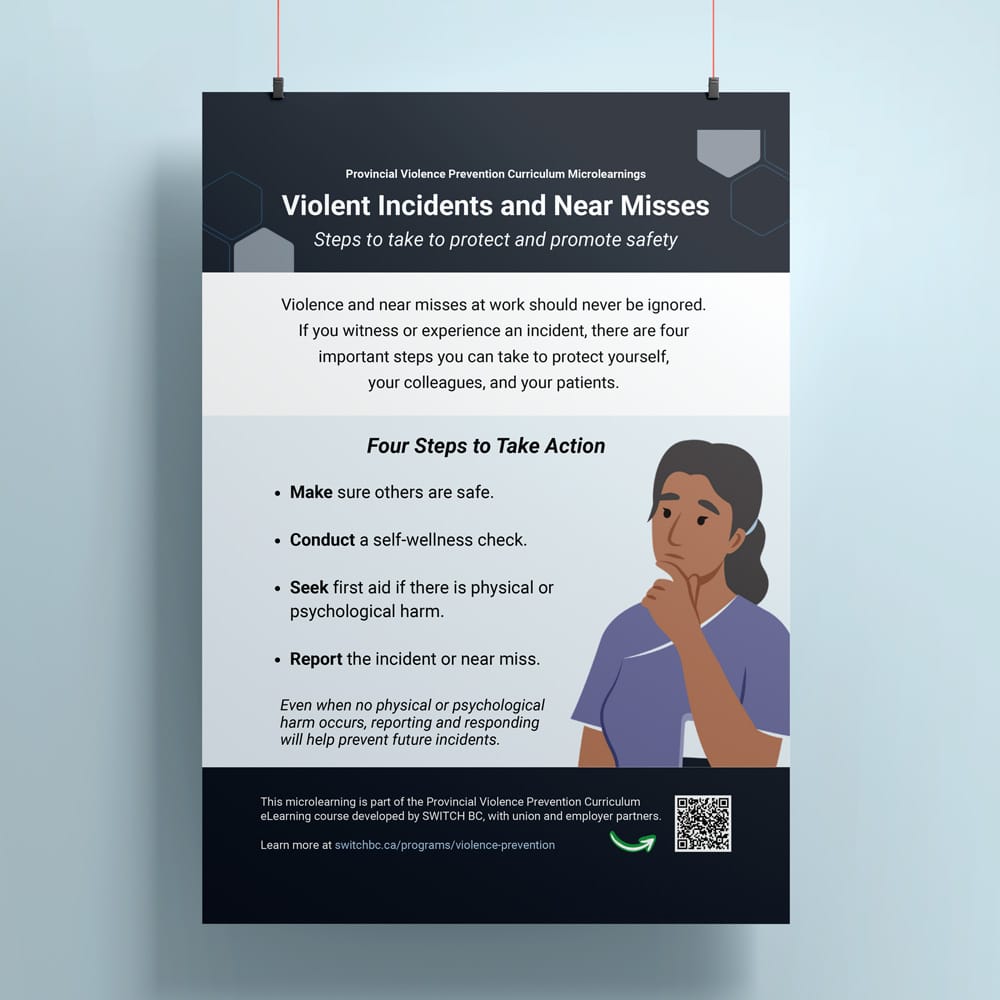



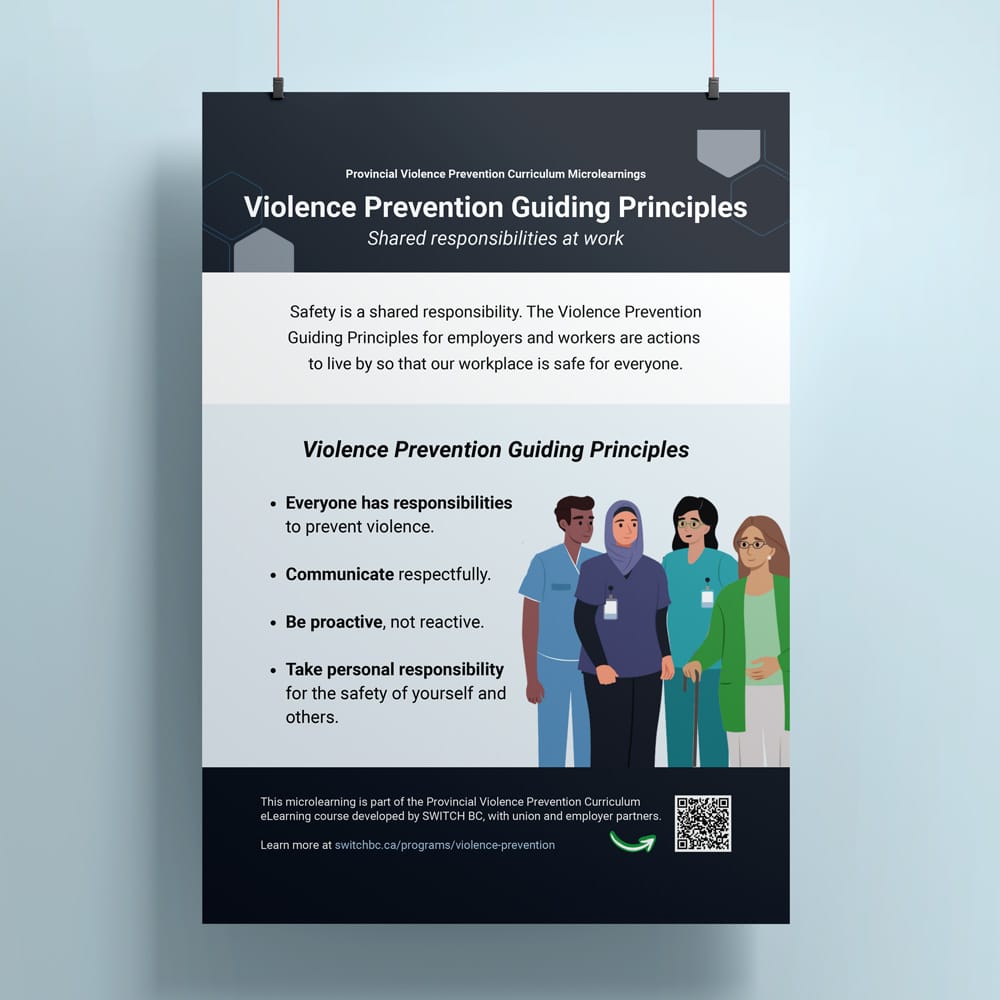
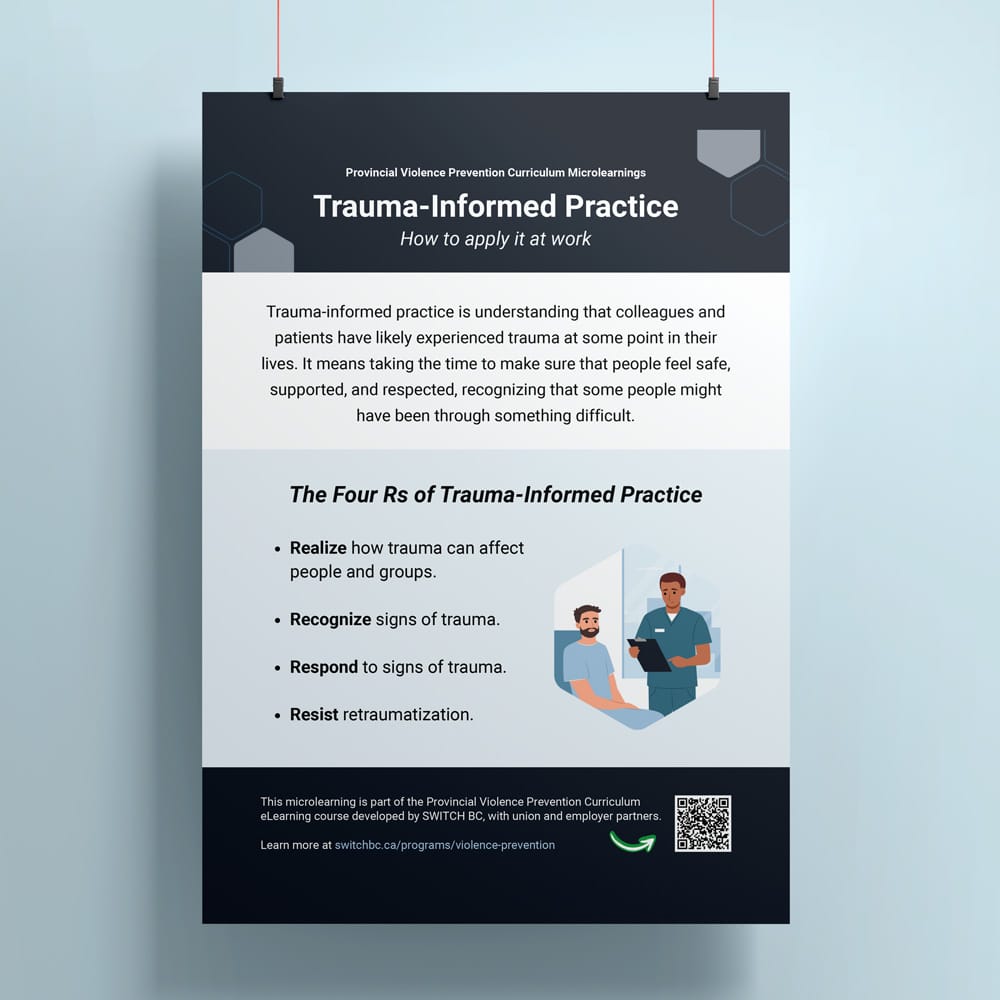
Module 1 – Introduction to Violence Prevention
Learn how this training can help keep you and others safe. Share the posters about guiding principles for violence prevention and Trauma-Informed Practice.
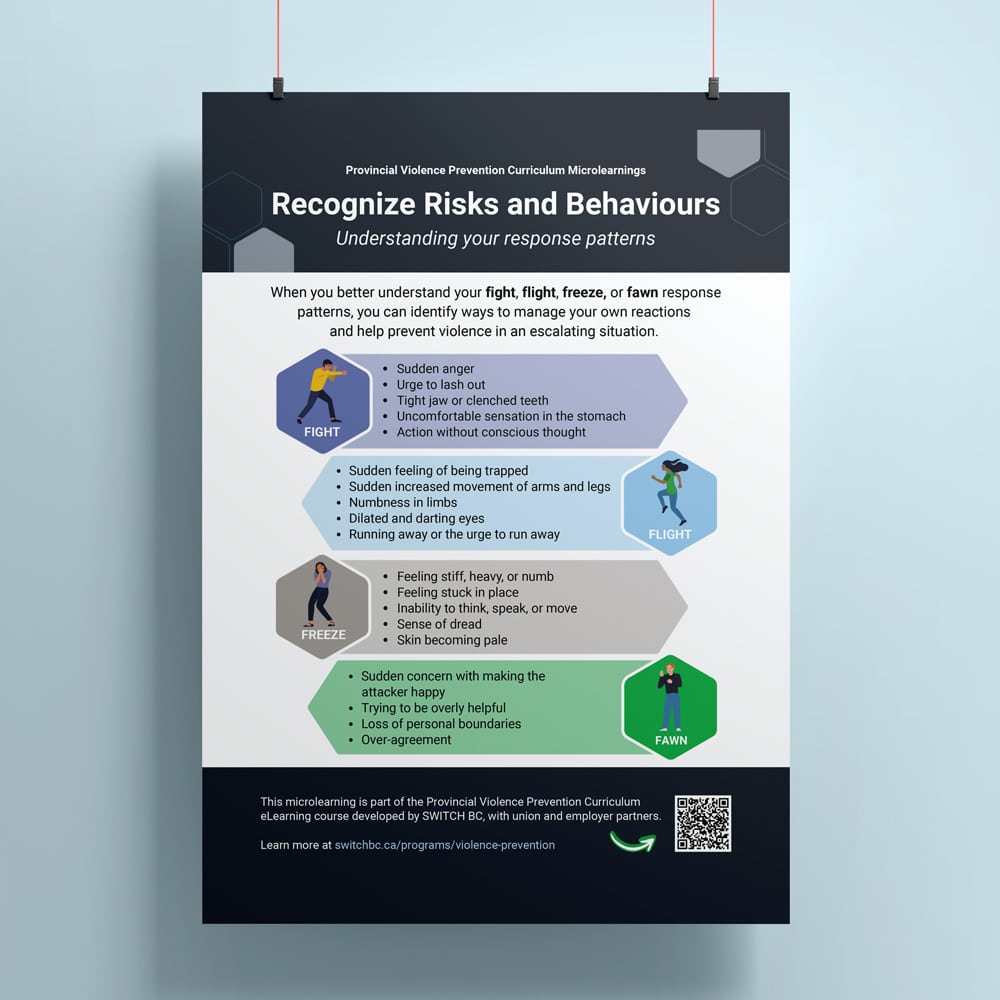
Module 2 – Recognize Risks and Behaviours
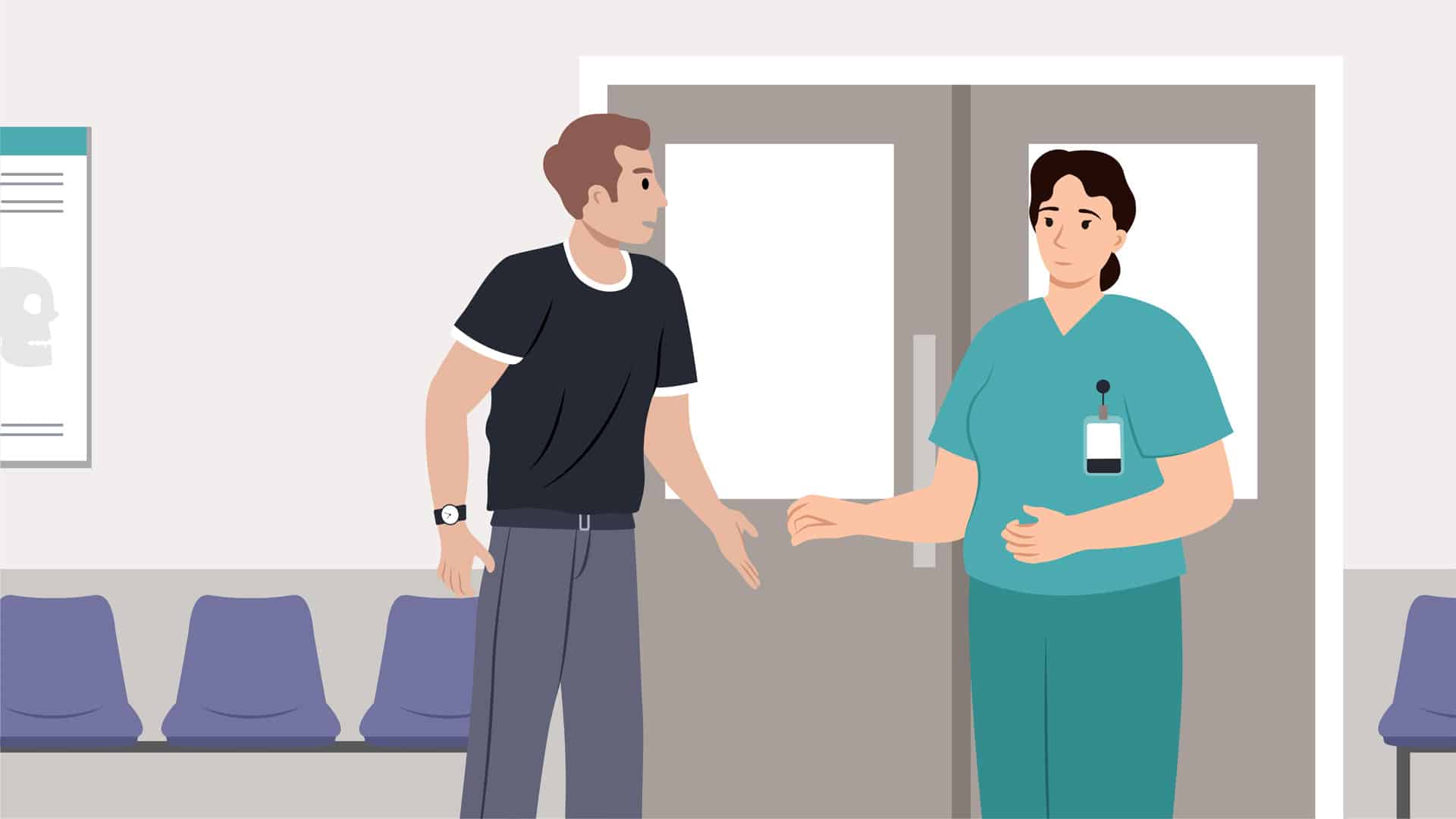
Learn about the risk factors and stressors that can increase the chance of violence, signs of emotional crisis, and behavioural emergencies. Watch the scenario below. Share the poster about how people respond in stressful situations.
Patients and families may feel frustrated if wait times for medical professionals are long. Learn how to watch for the stressors to better recognize risks.
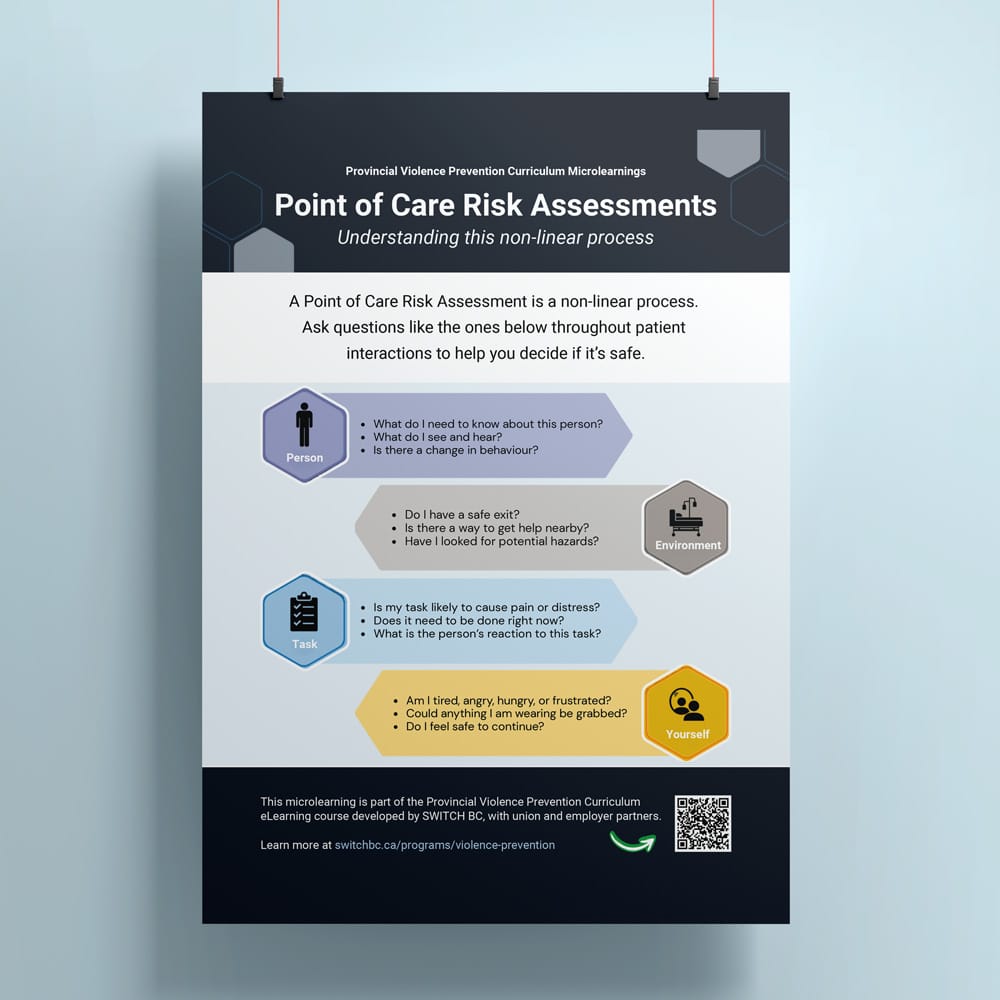
Module 3 – Assess and Plan Part 1: Complete Point of Care Risk Assessments
Learn how to assess risk and take steps to prevent or reduce the chance of violence. Watch the scenario below. Share the poster for tips on how to complete Point of Care Risk Assessments safely and effectively.
Violence can take place anywhere, including over the phone. Practice completing a Point of Care Risk Assessment over the phone.
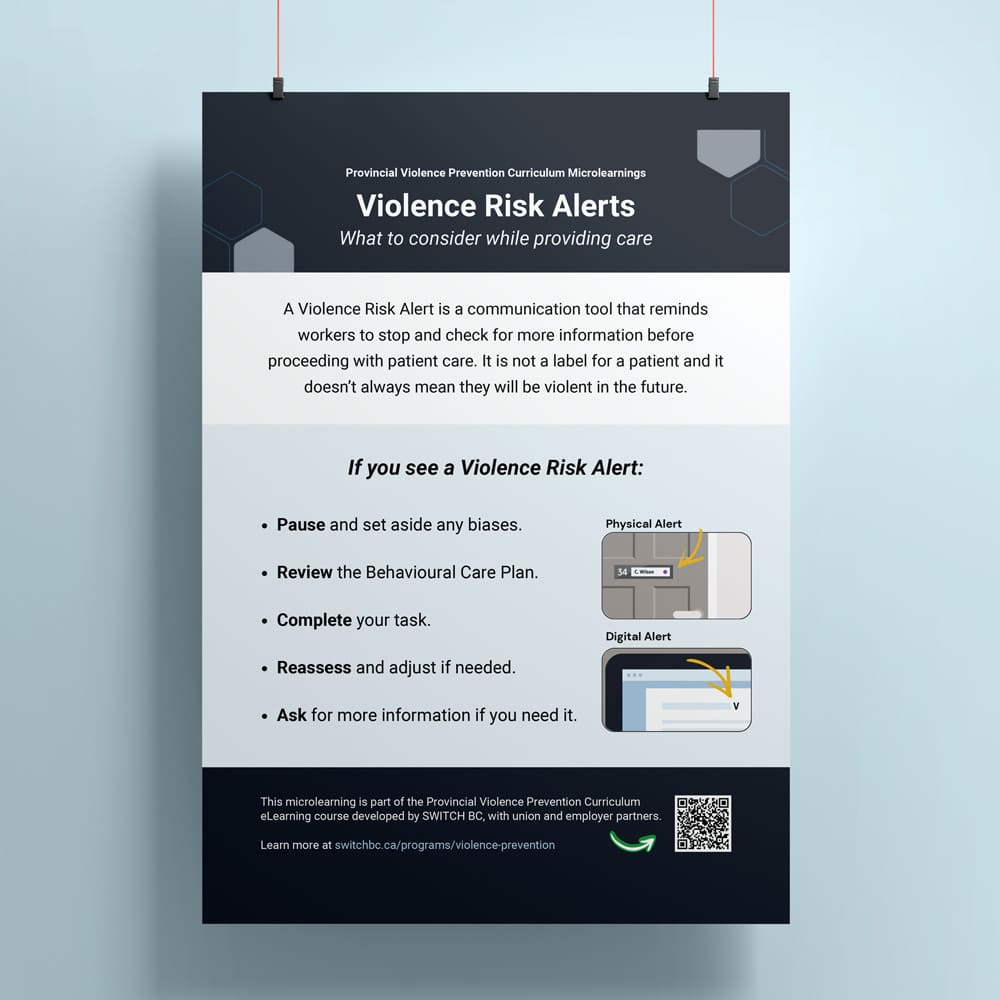
Module 4 – Assess and Plan Part 2: Develop Behavioural Care Plans
Learn about Violence Risk Alerts and Behavioural Care Plans. Focus on Indigenous Cultural Safety, Equity, Diversity, Inclusion, and Trauma-Informed Practice. Watch the scenario below. Share the poster for tips on how to respond to a Violence Risk Alert.
A food service worker sees a Violence Risk Alert in a Behavioural Care Plan. Watch and learn which steps to take next.
See how to create a Behavioural Care Plan when a long-term care resident becomes angry.
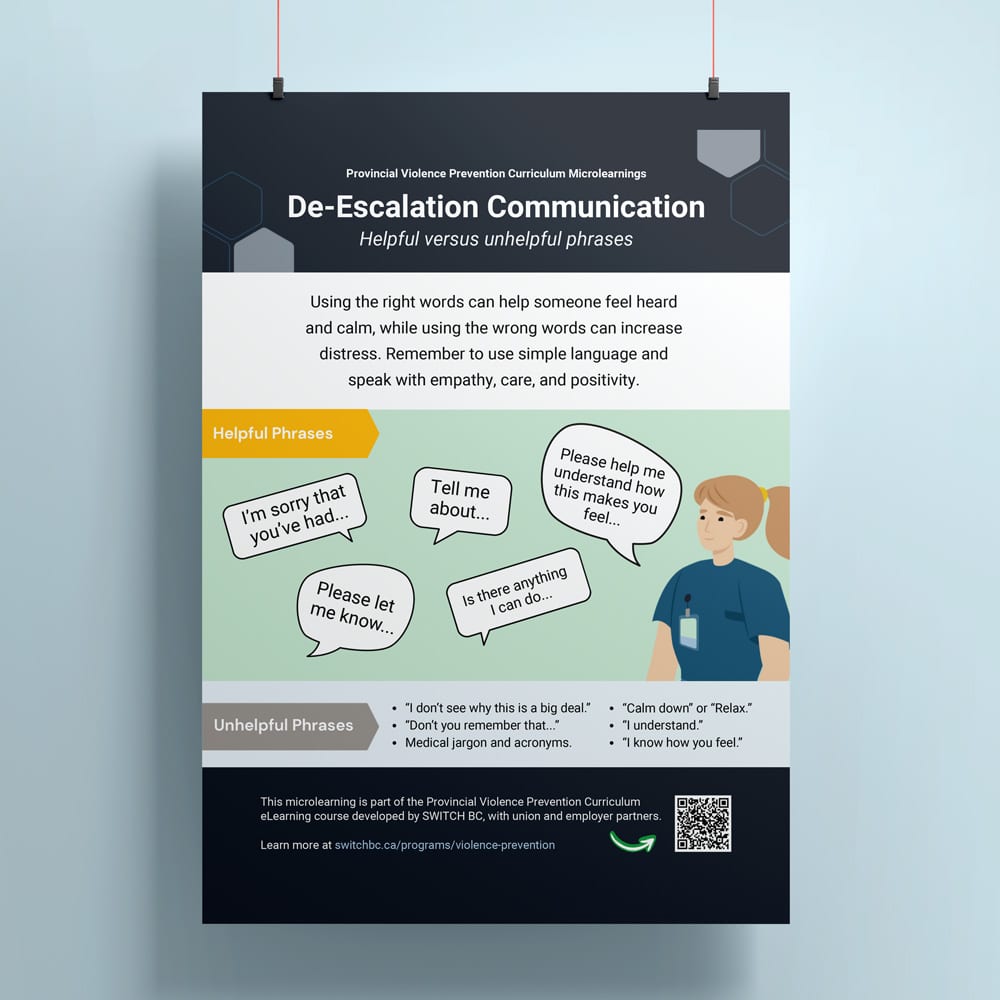
Module 5 – Respond to the Risk Part 1: Perform De-escalation Communication
Learn de-escalation strategies, how and when to ask for help, and personal safety techniques. Watch the scenarios below. Share the posters on reminders for using supportive language and providing care safely in someone’s personal space.
A patient in an Emergency Department is verbally aggressive and may also be intoxicated. How should the nurse respond to the risk?
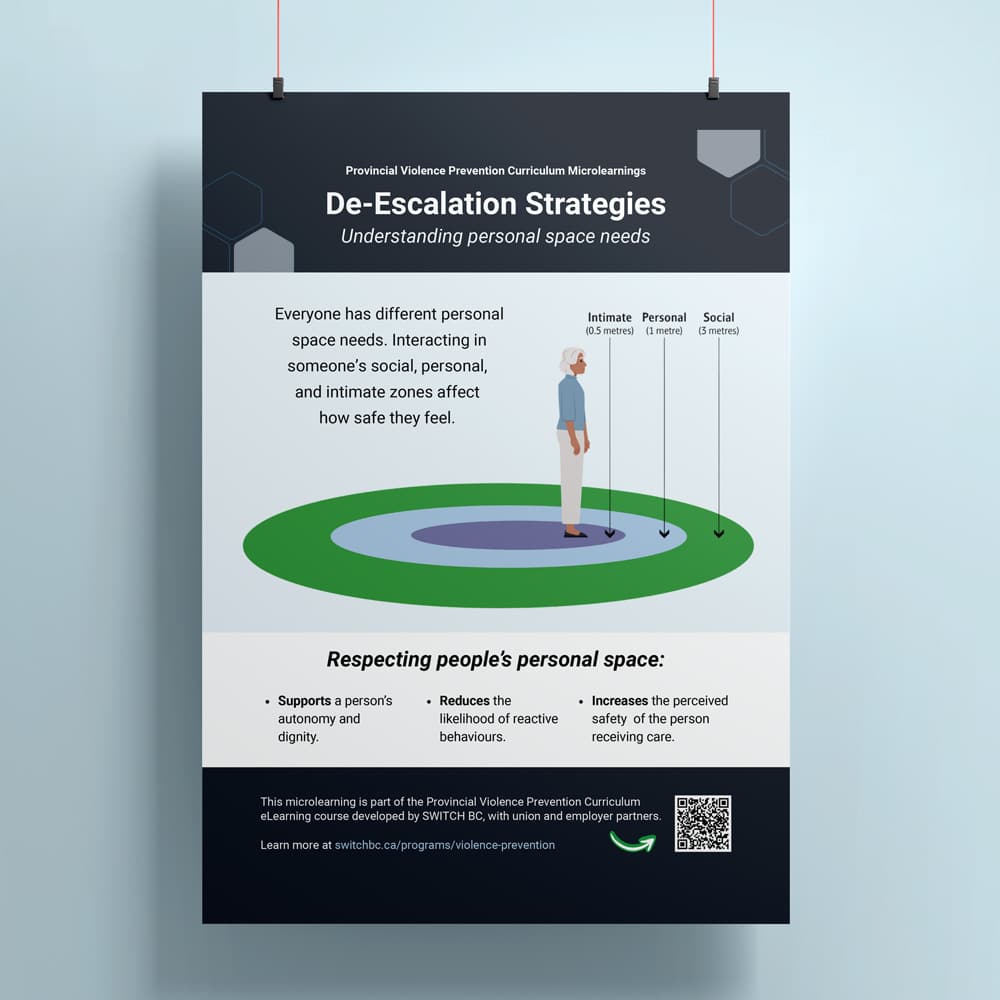
Determine what two paramedics should do when their patient starts to show signs of agitation while being transported the hospital.
Module 6 - Respond to the Risk Part 2: Perform De-escalation Strategies
Learn about de-escalation strategies and when it’s no longer safe to use them. Watch the scenario below. Share the poster for tips on recognizing situations where de-escalation isn’t safe.
When a Care Aide is threatened by a client’s family member, she must respond to the risk. Learn the steps to de-escalate the situation.
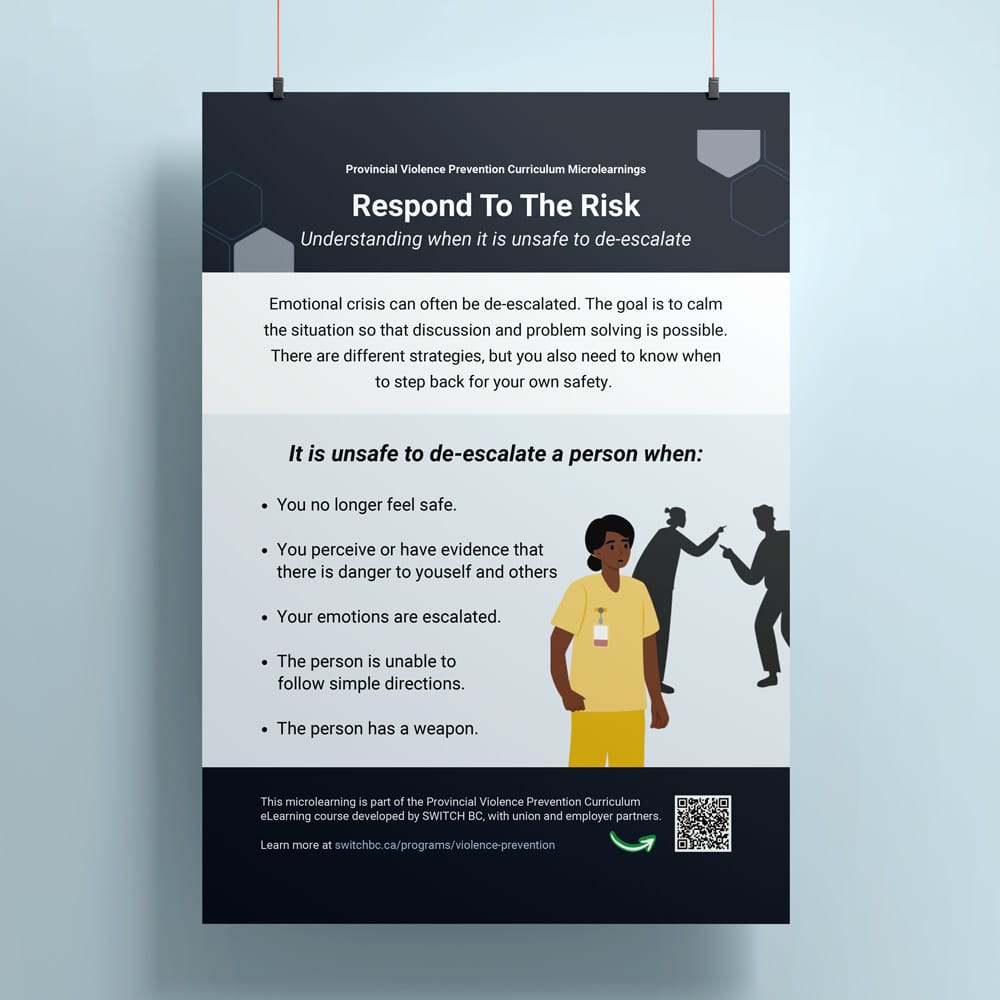
Module 7 - Respond to the Risk Part 3: Determine When and How to Get Help
Learn when and how to attempt de-escalation, when to call for help, and how to prioritize your own safety. Watch the scenarios below.
When a long-term care resident becomes violent, learn when and how a Care Aide calls for help.
Determine when and how two paramedics should get help when a bystander suddenly lunges at them with a sharp object while they are treating an injured person.
Module 8 – Report and Communicate Post Incident
Learn what to do after a violent incident or near miss, and what support you can expect from your supervisor. Watch the scenario below. Share the posters for tips describing violent behaviours and clear, practical steps to take following an incident.