




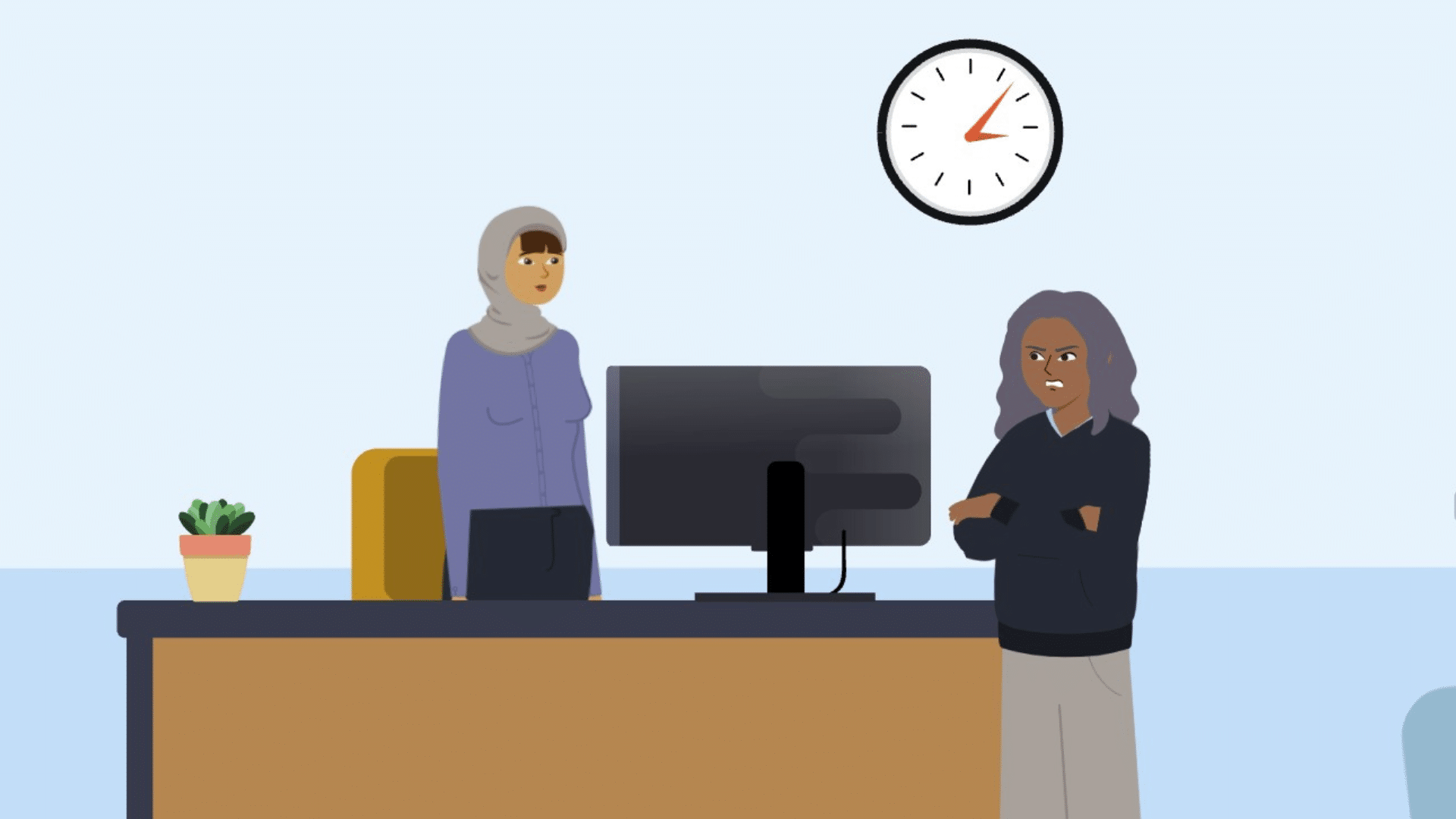
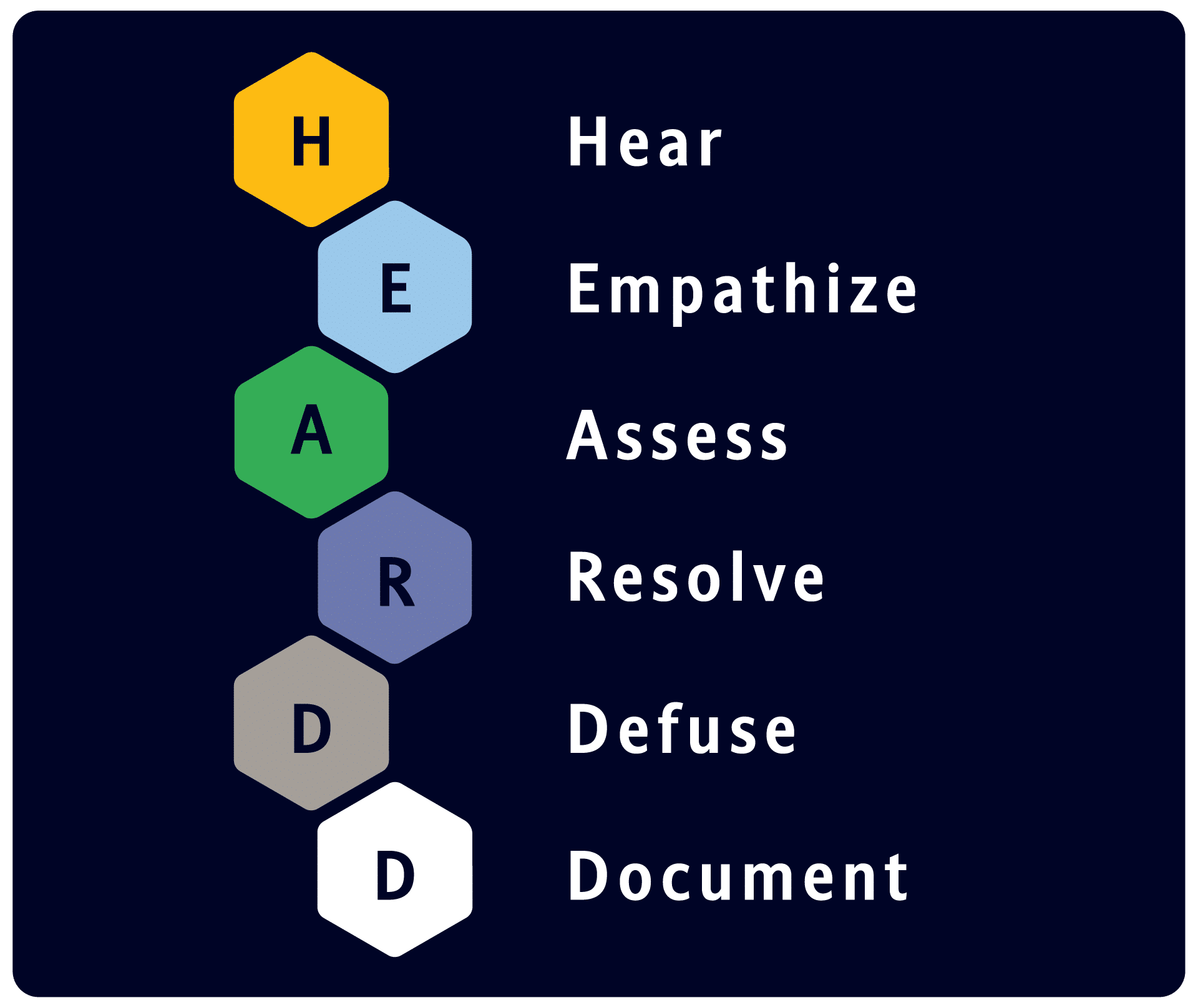
Have you heard about the HEARD+D method for defusing difficult interactions?
The HEARD+D method helps you handle heated situations calmly. HEARD+D tools help build your de-escalation skills for in person or over the phone conversations. Review them often to become more familiar with the HEARD+D method.
How to use the HEARD+D tool
HEARD+D Tools

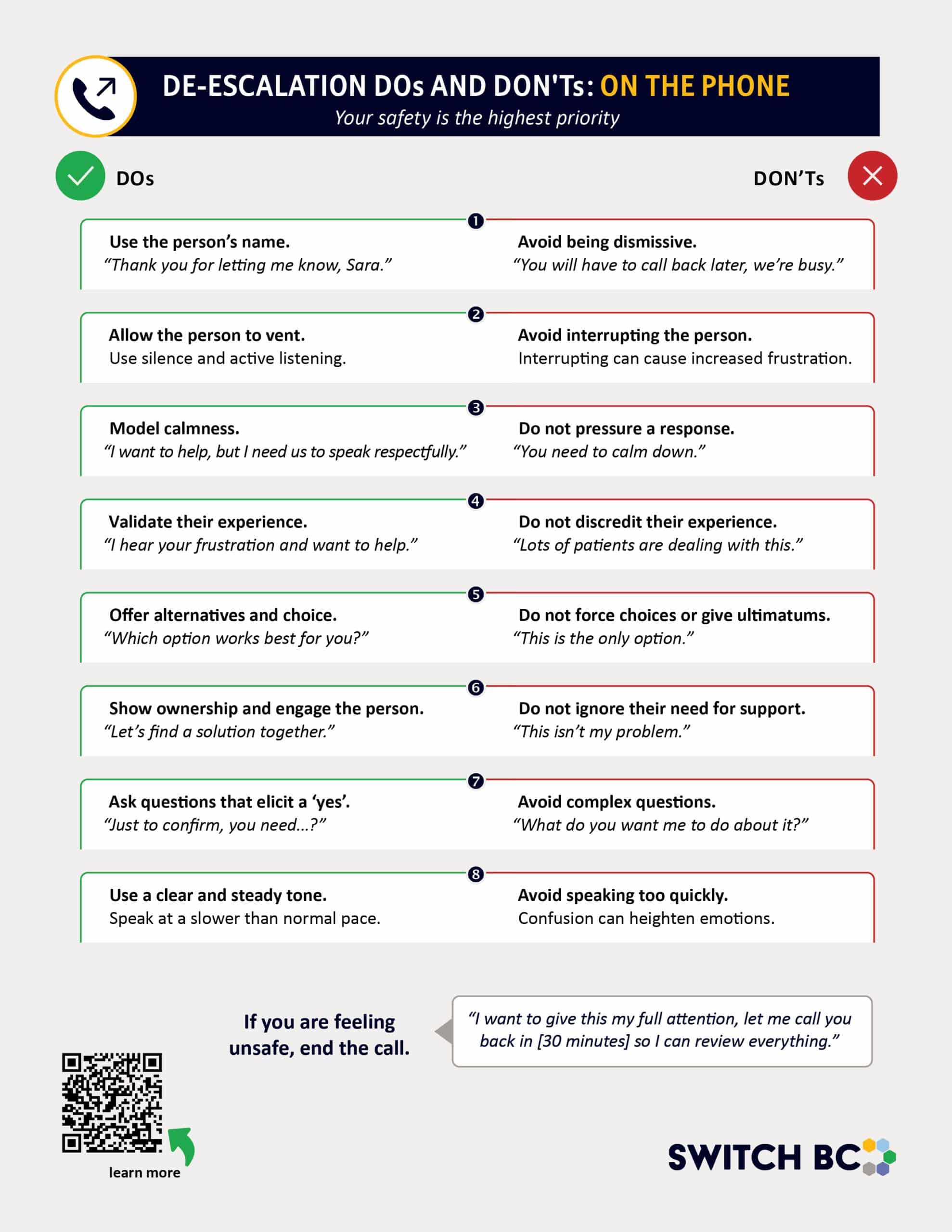
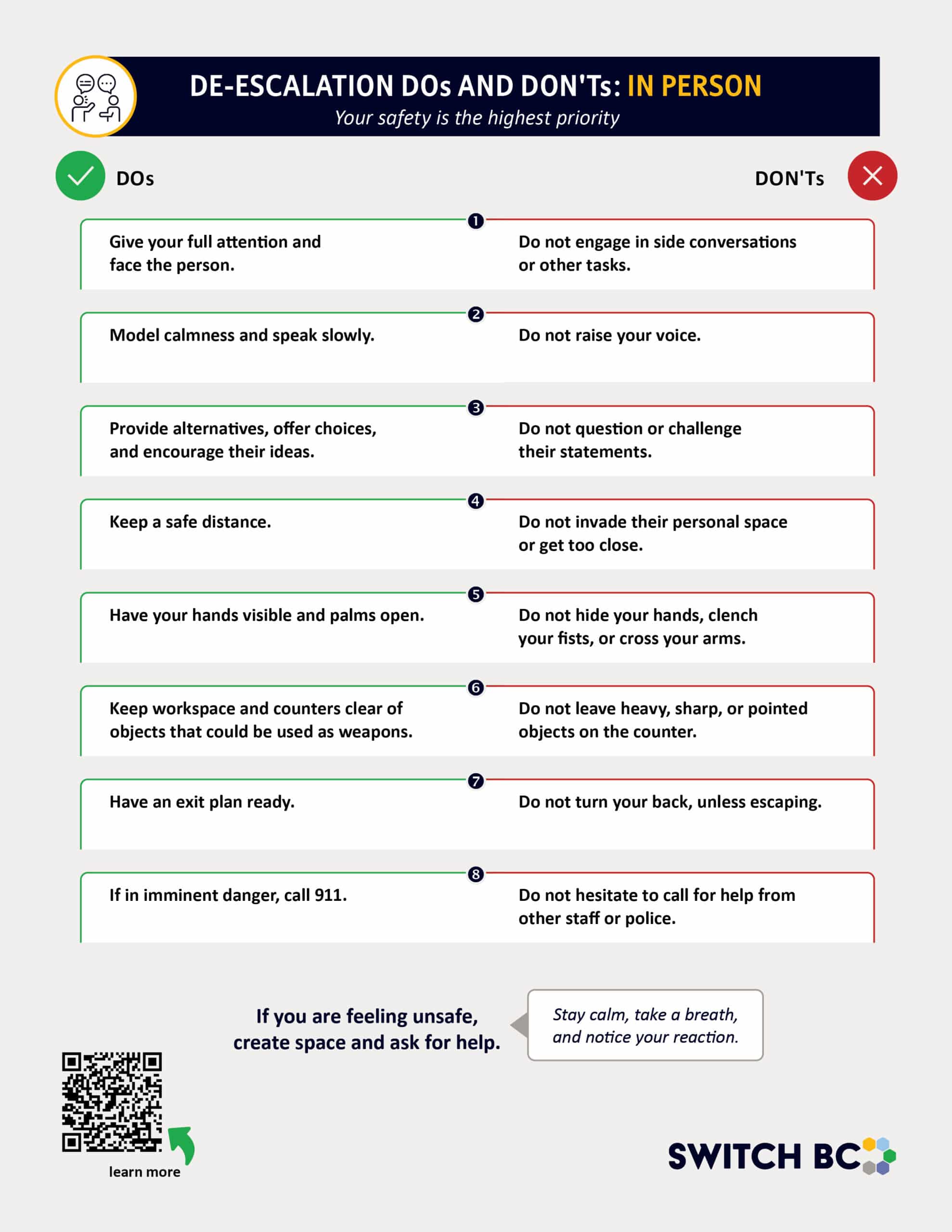
De-escalation Dos and Don’ts
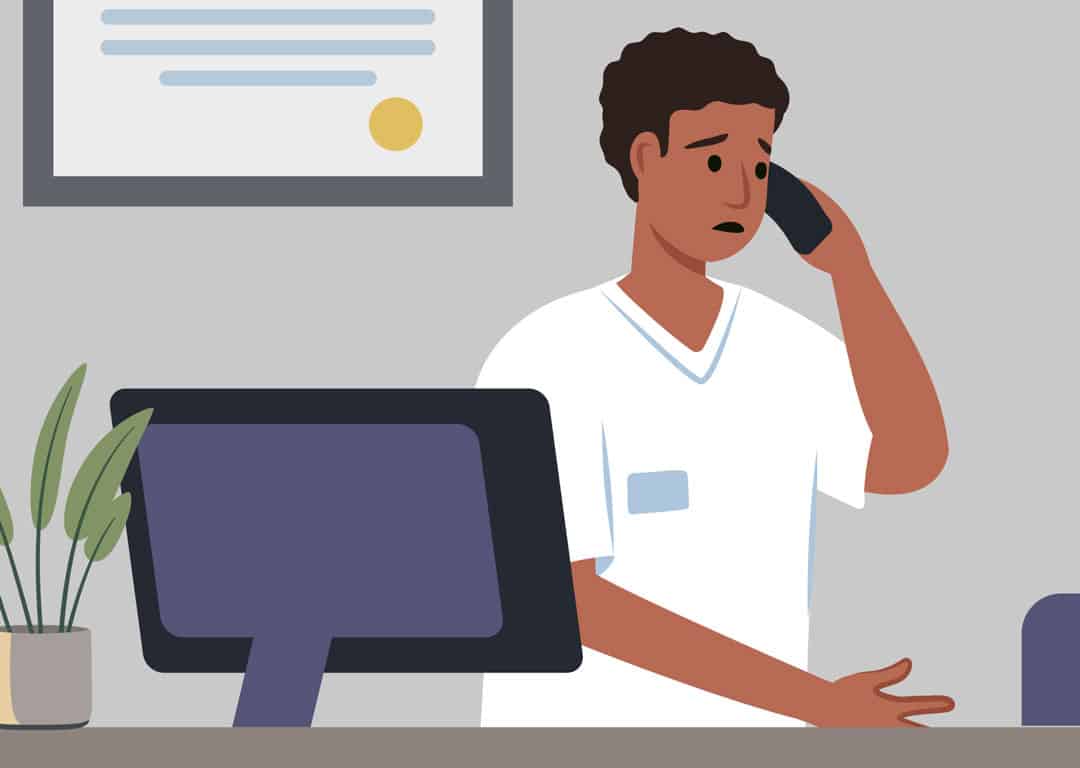
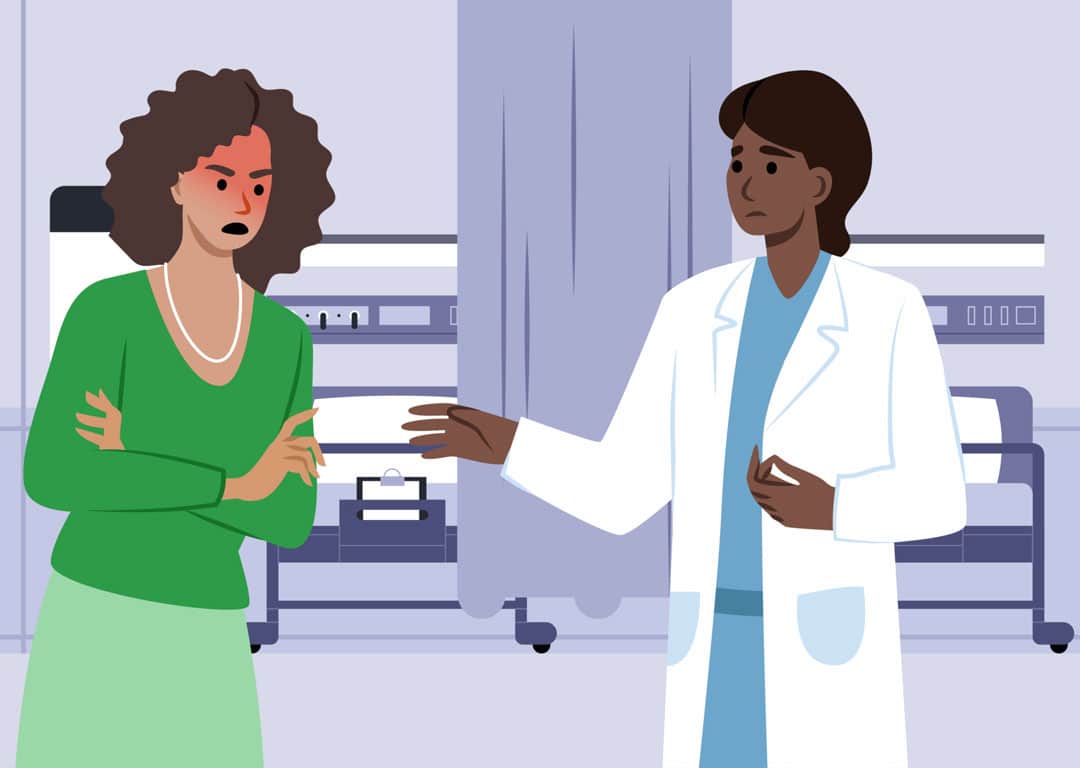
Being prepared for tough conversations often quickly helps calm patients, families, and the public. Here are some quick tips for in person or over the phone conversations that may become heated.
Benefits of strengthening your de-escalation skills:

Reduce Stress: Staff will feel more ready and confident in managing tough situations, which lowers stress.
Minimize Absenteeism: Staff may feel more willing to stay at or return to work after a stressful event.
Improve Patient Relationships: Calm and clear communication boosts patient satisfaction.
Maintain a Safe Environment: Preventing escalation helps create a safer, more welcoming clinic while improving workplace health and safety.
Increase Overall Efficiency: Effective communication lets staff focus more on patient care.
Check your assumptions
Violence prevention is everyone’s job. Building relationships and communicating respectfully with patients, families, and colleagues is key. It’s also important to know how to avoid triggers that lead to escalation.
Consider these points before making assumptions about someone’s perspective, especially regarding their experiences with trauma, violence, and culture:
- Be aware of your own biases.
- Respect diversity and inclusivity.
- Understand cultural influences and barriers.
Be empathetic. You may not know the level of pain or confusion a patient is managing at the time of the conversation.
De-escalation tools were adapted from the Community Physician Health and Safety program
The de-escalation tools were developed as part of the Community Physician Health and Safety (CPHS) program, co-developed by SWITCH BC and Doctors of BC and in consultation with the Ministry of Health. The tools were tested and refined thanks to valuable input from a diverse group of Medical Office Staff and Physicians across British Columbia. We extend our sincere thanks to those who shared their feedback and expertise. Please visit the CPHS portal to learn more. CPHS is funded through the Physician Master Agreement 2022.