




Working in high heat and wildfire conditions
As temperatures begin to climb in parts of British Columbia, and wildfires are being reported, there are some steps employers/supervisors and workers can take to keep themselves and their co-workers healthier and safer on the job.
Hot weather health and safety tips
Here are some hot weather health and safety tips, especially for people working in healthcare in outdoor environments.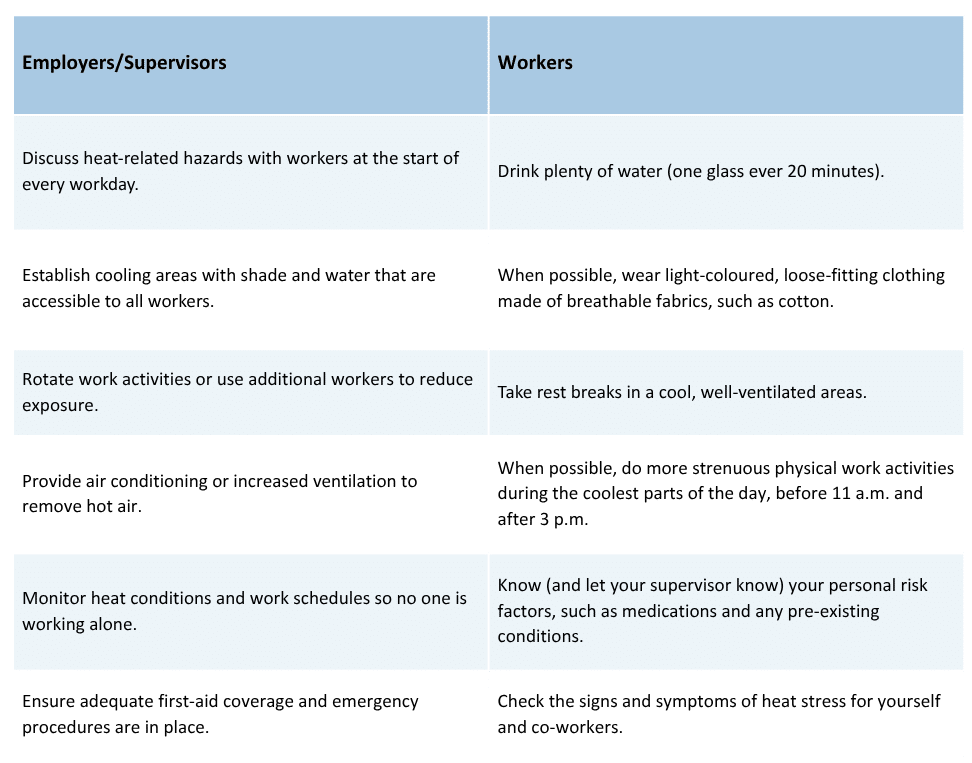
Adapted from WorkSafeBC (2023). Preventing Heat Stress at Work
Wildfire smoke exposure safety tips
Wildfire smoke can cause significant challenges for health workers, especially people who work outdoors.
Here are some tips from WorkSafeBC to reduce the health and safety risks related to wildfire smoke exposure.
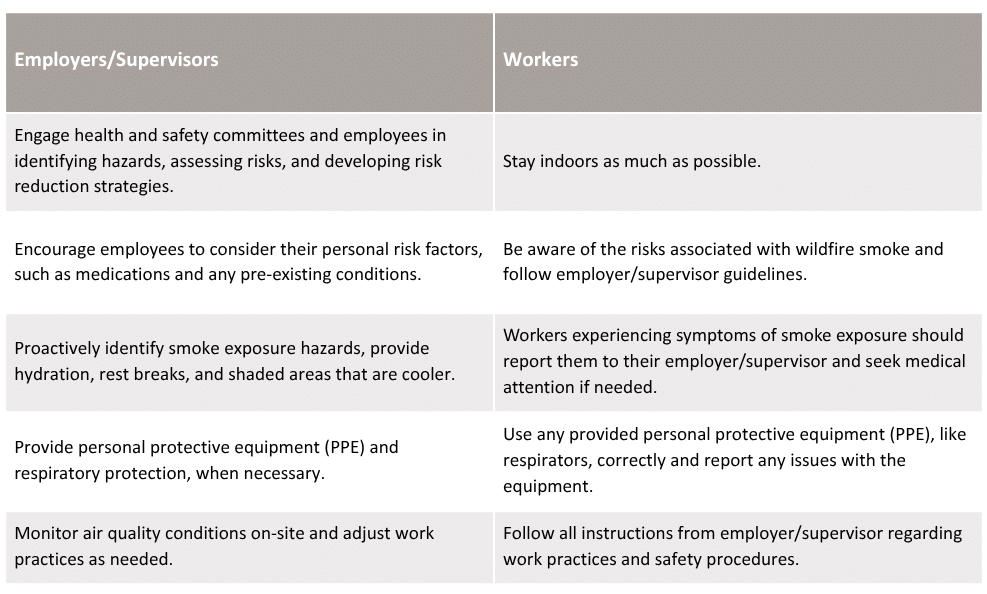
Adapted from WorkSafeBC (2024). WorkSafeBC advises employers to plan ahead to protect workers from extreme heat and wildfire smoke
Signs of heat-related illnesses
Heat-related illness can sneak up on you if you are not prepared and do not know what to look for. Learn the symptoms and what you can do if you, your coworkers, patients, clients, or residents experience heat stroke or heat exhaustion.
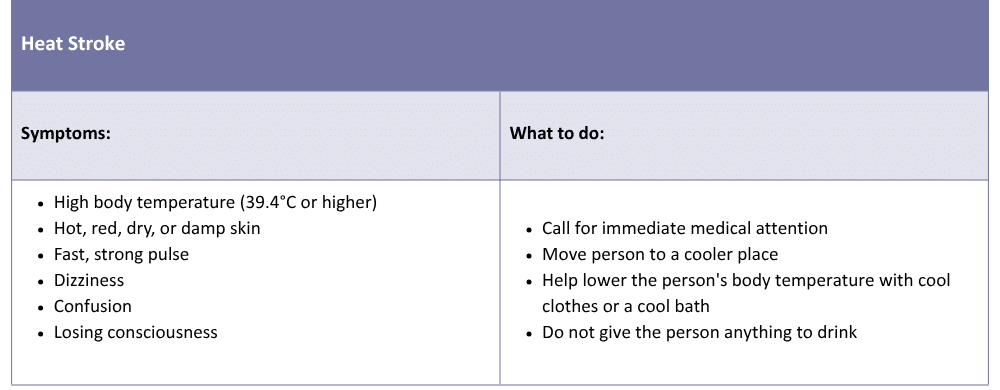
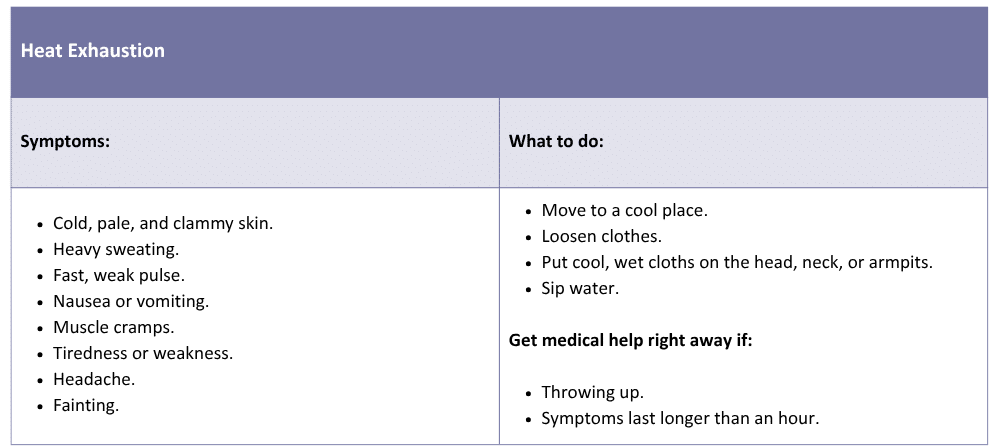
Adapted from CDC (2017). About Heat and your Health
Signs of wildfire smoke exposure
Wildfire smoke exposure can cause a range of symptoms, from mild irritation to more serious health effects, especially for those with pre-existing health conditions.
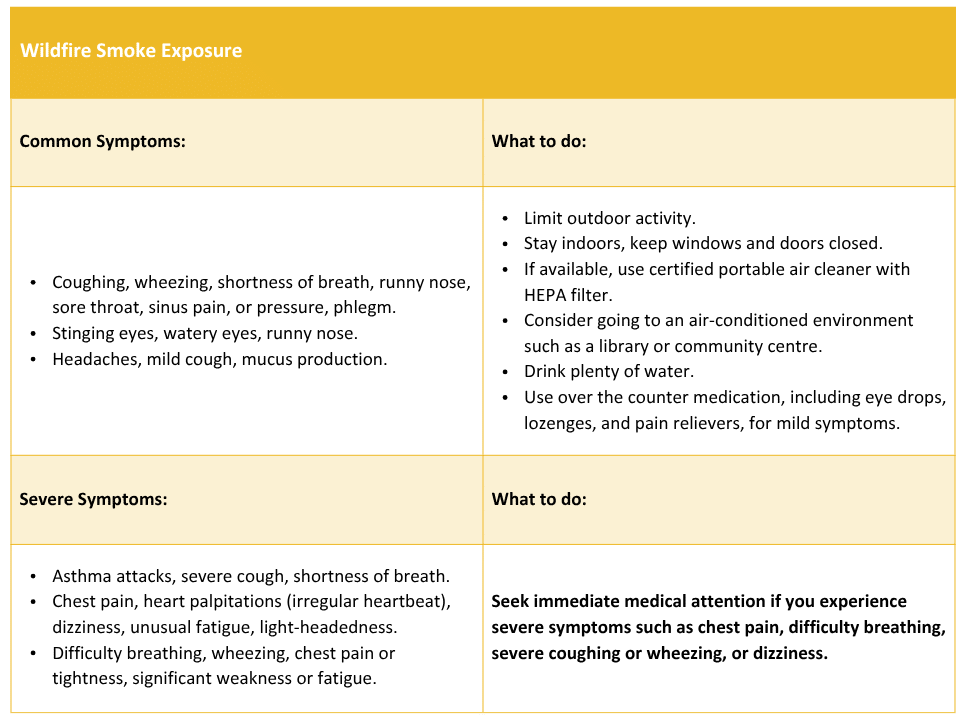
Adapted from BC Centre for Disease Control (2024). Health Effects of Wildfire Smoke