

PILOT
Psychological Health and Safety Toolkit for Joint Occupational Health and Safety Committees
This toolkit is designed to help Joint Occupational Health and Safety Committee (JOHSC) members support psychological health and safety (PHS) in their workplaces. It includes practical tools and resources to help start conversations, identify concerns, and make meaningful improvements that support safe and healthy workplaces for everyone.
About the Pilot
Meet the Toolkit Characters
Healthcare Workplaces: Factors Influencing Psychological Health and Safety
Psychological health and safety at work goes beyond preventing harm. It means building a workplace where people support mental wellbeing and help each other thrive. It’s about creating a culture of respect, inclusion, and open communication that strengthens mental health and builds stronger teams.
In healthcare, there are factors that can have a positive or negative impact on mental health. These are things such as reasonable workload, teamwork, communication, and support. Two of these factors are unique to healthcare: protection from moral distress and support for psychological safe-care.
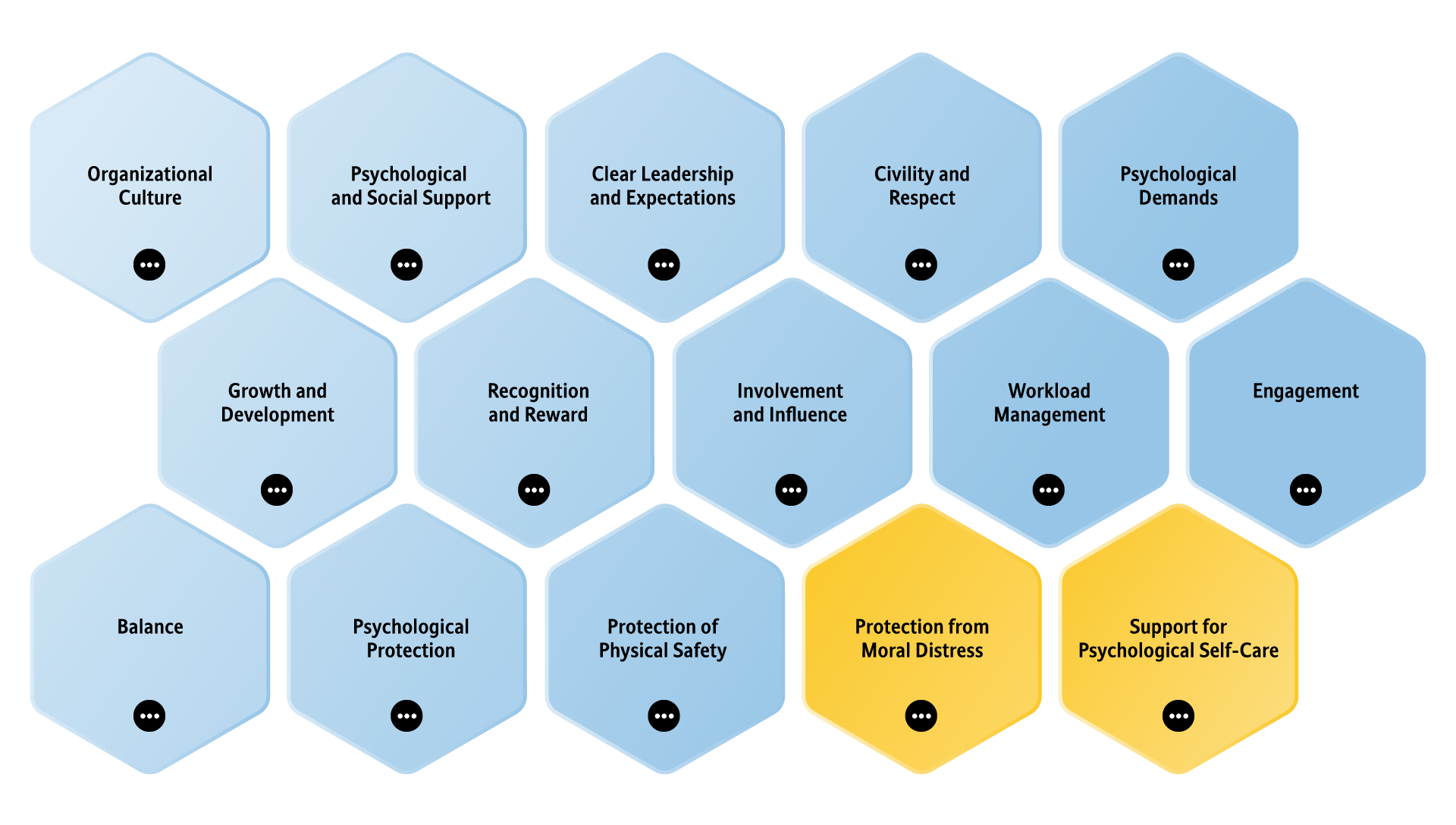
Organizational Culture
When You Have It
- People are encouraged to speak up
- People trust one another
- People show respect for others’ ideas, values, and beliefs
- People are held responsible for their actions
- Problems and conflicts are addressed effectively
When You May Not Have It
- People spread rumours or favour certain workers
- The organization allows negative behaviours to continue
- Worker morale is low
- Conflicts are ignored or handled poorly
Psychological and Social Support
When You Have It
- People feel supported by coworkers and leaders
- Mental health and wellbeing are valued and treated as a priority
- The organization has processes to assist employees who are struggling
- Workers returning from mental health leave feel supported
When You May Not Have It
- People feel isolated or unsupported
- Workers don’t know where to turn when they feel stressed or overwhelmed
- There is little help available when people struggle with workload or personal issues
- Returning workers feel left on their own after time off
Clear Leadership and Expectations
When You Have It
- People know their scope of work and what is expected of them
- Supervisors provide helpful feedback on performance
- Leaders engage workers about proposed changes
- Leaders communicate changes clearly as soon as they can
When You May Not Have It
- People are unclear about work, roles, or expectations
- Supervisors don’t provide support or feedback
- Important changes are not communicated in time
- Decisions are unclear leaving workers feeling confused and frustrated
Dignity and Respect
When You Have It
- People treat each other with respect
- Conflicts are resolved constructively
- Workers from different backgrounds are respected, and everyone is treated fairly
- The organization deals with inappropriate behaviour effectively
When You May Not Have It
- People act rudely or are disrespectful to each other
- Conflicts are ignored
- Workers from different backgrounds are treated unfairly
- Inappropriate behaviour is overlooked or accepted
Psychological Demands
When You Have It
- Jobs and work systems match workers’ skills and abilities
- People have a say in how they organize and complete their work
- Workers have enough control and autonomy in their jobs to manage demands effectively
- Recruitment, training, and leadership focus on people-related skills
When You May Not Have It
- Jobs or work systems don’t match workers’ skills
- People have little control or input over their work
- Lack of autonomy increases stress and frustration
- Organizational processes ignore people-related psychological strain on workers
Growth and Development
When You Have It
- Supervisors help workers develop their skills and grow in their roles
- Workers are encouraged to try new challenges and take on more responsibility
- Training and learning opportunities are available both inside and outside the organization
- The organization values ongoing development for everyone
When You May Not Have It
- Workers feel bored or stuck in current roles
- There is little guidance or mentoring to improve skills
- Opportunities to learn or take on new tasks are rare
- Personal and interpersonal growth isn’t a priority for the organization
Recognition and Reward
When You Have It
- Workers are paid fairly for the work they do
- Efforts and achievements are noticed and appreciated
- Teams celebrate shared achievements
- The organization shows it values workers’ commitment and contributions
When You May Not Have It
- Workers feel unmotivated or disconnected from their work
- Teams rarely celebrate or acknowledge achievements
- Lack of recognition leads to stress, low engagement, or burnout
- Workers’ commitment and passion for their work goes unnoticed
Involvement and Influence
When You Have It
- Workers have some control over how they do their work
- Leaders listen to workers’ suggestions when making decisions
- The organization tells workers about important changes promptly
- The organization encourages worker input
When You May Not Have It
- Workers feel their ideas are ignored or don’t matter
- Workers have little say in changes that affect their work
- Workers aren’t clear about how decisions impact their jobs
- Low involvement makes workers less motivated and engaged
Workload Management
When You Have It
- Workers can complete tasks in the time they have
- Leaders provide the support and resources workers need
- Leaders set reasonable deadlines and workloads
- The organization reduces interruptions and distractions
When You May Not Have It
- Workers feel rushed or overwhelmed by tasks
- Leaders don’t give enough guidance or resources
- Unclear priorities or unrealistic deadlines cause stress and fatigue
- Frequent disruptions make it hard to focus on work
Engagement
When You Have It
- Workers feel connected to their work, coworkers, and organization
- People are motivated to put in extra effort when needed
- Workers take pride in their work and see it as important
- People care about the organization’s success and mission
When You May Not Have It
- Workers feel detached or uninterested in their work
- Low motivation leads to mistakes or missed opportunities
- Workers feel isolated or unsupported
- People lose focus, morale drops, and commitment fades
Balance
When You Have It
- The organization encourages workers to take breaks and time off
- People can balance the demands of work and personal life
- Leaders support workers when personal or family issues come up
- Workers have energy left at the end of the workday for their personal life
When You May Not Have It
- Workers feel constantly tired or burned out from work
- Work gets in the way of personal or family responsibilities
- Lack of support causes stress, frustration, or resentment
- Poor balance leads to injuries, missed work, and higher turnover
Psychological Protection
When You Have It
- The organization works to prevent bullying, harassment, and discrimination
- Workers feel safe asking questions, sharing ideas, and reporting problems
- Leaders care about peoples’ emotional wellbeing
- People believe the workplace is mentally healthy
When You May Not Have It
- Workers feel threatened or unsafe at work
- Stress, fear, or uncertainty affects how people do their jobs
- People avoid raising concerns or giving feedback
- Poor psychological protection increases conflicts and stress-related illness
Protection of Physical Safety
When You Have It
- People get the training, tools, and equipment they need to be healthy and safe at work
- Leaders deal with physical hazards and risks quickly and effectively
- Workers feel safe and confident in their work environment
- The organization schedules work to allow for rest and recovery
- Workers asked to do work that they believe is unsafe, have no hesitation in refusing to do it
When You May Not Have It
- Workers worry about hazards or unsafe conditions
- Lack of guidance or equipment puts workers at risk of injury
- Leaders do not respond when safety issues arise
- Unsafe practices increase stress, fatigue, and accidents
Protection from Moral Distress
When You Have It
- Workers can make decisions that match their professional and personal values
- Coworkers and leaders support workers when facing ethical challenges
- Teams talk openly and support each other
When You May Not Have It
- Workers feel powerless or forced to compromise their values
- Workers cannot provide proper care due to staffing limits or rules
- Workers feel leadership decisions prevent them from having a say in patient care decisions
- Pressure to meet productivity targets comes before patient care and worker wellbeing
Support for Psychological Self-Care
When You Have It
- Leaders show they care about mental health through policies, training, and preventive practices
- Workers can take breaks, use time off, and access wellbeing resources
- Teams support each other and hold regular debriefs after stressful events
- Workers feel able to speak up about their mental health needs
When You May Not Have It
- Workers feel they must put patients or work ahead of their own wellbeing
- Working conditions make it hard for people to care for themselves
- Teams offer little support due to conflict, hierarchy, or lack of understanding
- Leaders and policies do not provide resources or prioritize mental health