

PILOT
A Quick Guide to the Standard for Psychological Health and Safety in the Workplace
What is the Standard?
The National Standard of Canada for Psychological Health and Safety in the Workplace (CAN/CSA/BNQ Z1003), known simply as “the Standard,” provides a framework with guidelines to help organizations prevent harm and support mental wellbeing at work.
Why this Matters
In B.C. healthcare, psychological injuries are rising, yet they can be prevented. As a Joint Occupational Health and Safety Committee (JOHSC) member, you already play a key role in protecting physical safety and preventing injuries. Psychological safety and physical safety are closely connected and equally important. Understanding your role in putting the Standard into action helps you support both.
Putting the Standard into practice can help organizations:
- Prevent injuries and illnesses
- Build trust, respect, and inclusion
- Improve staff engagement, retention, and recruitment
- Boost productivity, creativity, and innovation
- Strengthen teamwork and communication
- Reduce conflict and complaints
- Improve quality of care
The Standard offers a step-by-step way to:

Find and remove hazards that pose a risk of psychological harm (like heavy workloads).
Assess and manage risks that cannot be fully removed (like stress).
Promote wellbeing through workplace practices.
Build a respectful, supportive work culture.
What does the Standard look like?
The Standard includes 8 key principles and 5 system factors. Together, they work to create a psychologically healthy and safe workplace.

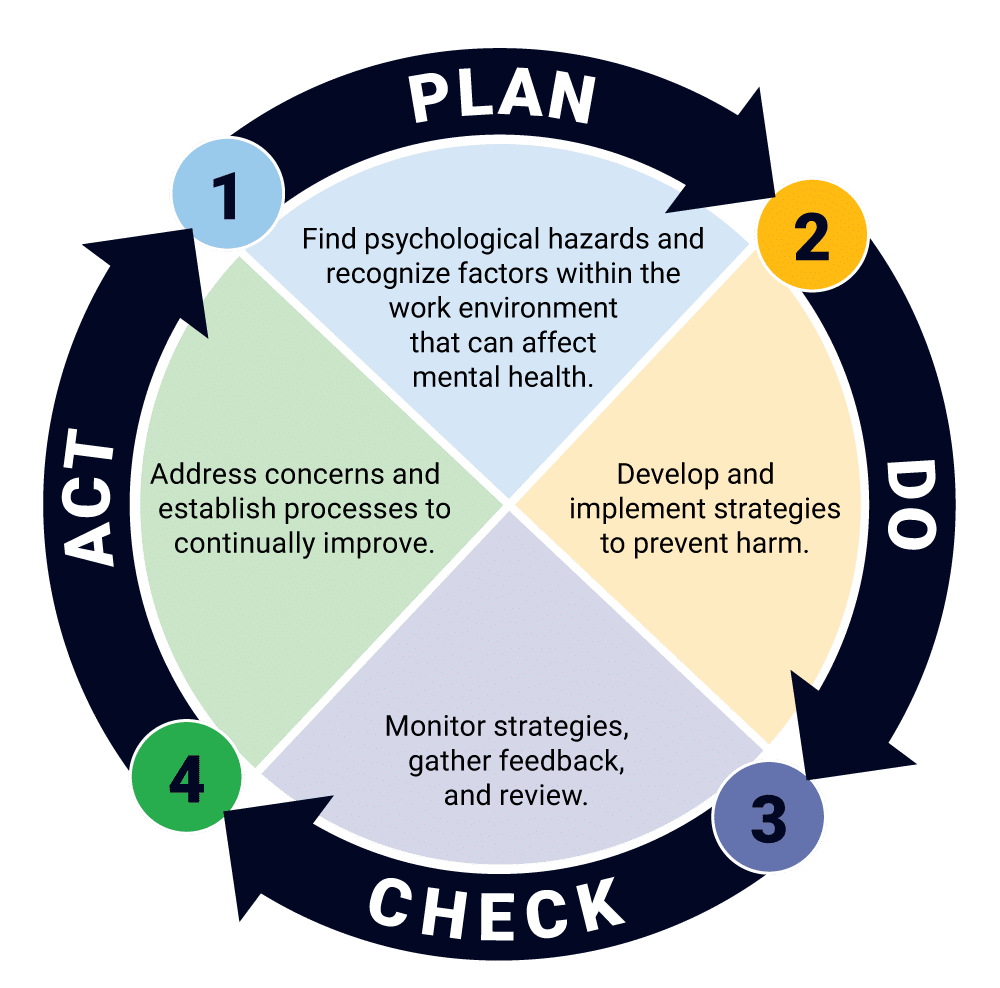
How Does the Standard Work?
The Standard provides a structured framework for organizations, using the Plan-Do-Check-Act cycle, a simple, well-known method in health and safety that guides continuous improvement.
What Can your JOHSC Do?Your JOHSC plays a key role in supporting the creation and sustainment of a psychologically healthy and safe workplace.
Your JOHSC plays a key role in supporting the creation and sustainment of a psychologically healthy and safe workplace.

Start Here
Here are some ways you can treat psychological health and safety with the same importance as physical health and safety:
- Review related policies and procedures and how they connect to your role as a JOHSC.
- Talk about psychological health and safety at your monthly JOHSC meeting.
- Connect physical and psychosocial hazards – they often influence each other.
- Include psychological health and safety in your JOHSC activities, such as inspections, assessments, investigations, and data collection reviews.
- Model respectful, supportive, and inclusive behaviour in your interactions.
- Share this guide with new committee members and use it to start conversations.
Application tools are under development and will be part of the Tier 2 pilot in the future.

Keep Learning
Continue to build your knowledge by:
- Exploring mental health training options, such as Mental Health First Aid.
- Taking a deeper dive into the Standard, available for free download.
- Reviewing your organization’s Equity, Diversity, and Inclusion and Indigenous Cultural Safety resources.

Take Action
Reflection: What’s one way your JOHSC members could support improving psychological health and safety in your workplace this month?
Action: Add a psychological health and safety topic to your next JOHSC meeting agenda.


