

Action We Are Taking
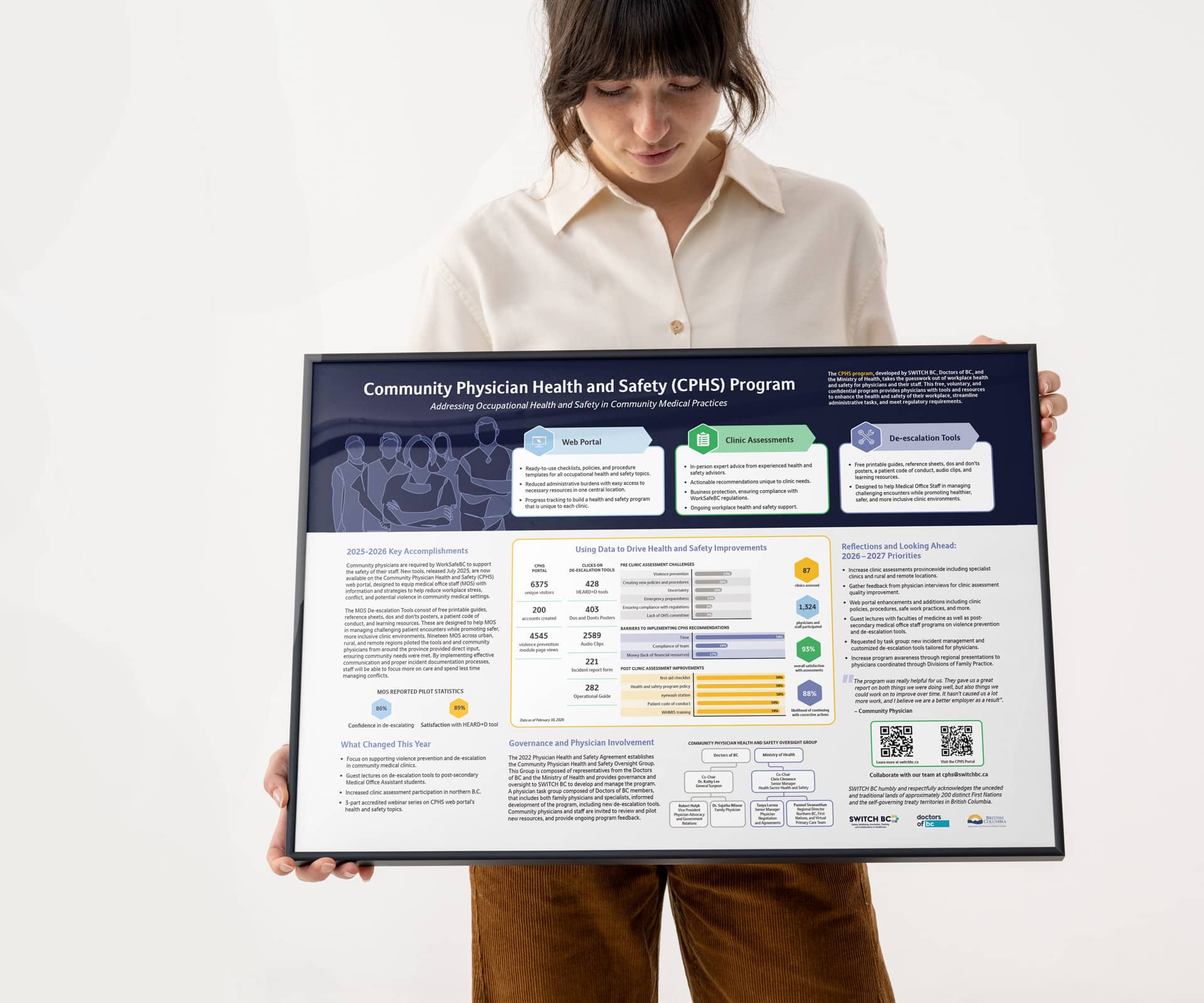
SWITCH BC’s Community Physician Health and Safety program expanded its topics to include de-escalation tools to meet the growing need for violence prevention supports. It engaged physicians and staff in clinics, trained medical office staff and post-secondary students, and participated in events throughout the province.
The program includes:
- Web portal
- Clinic assessments
- Engagement and training
Web Portal

Clinic Assessments
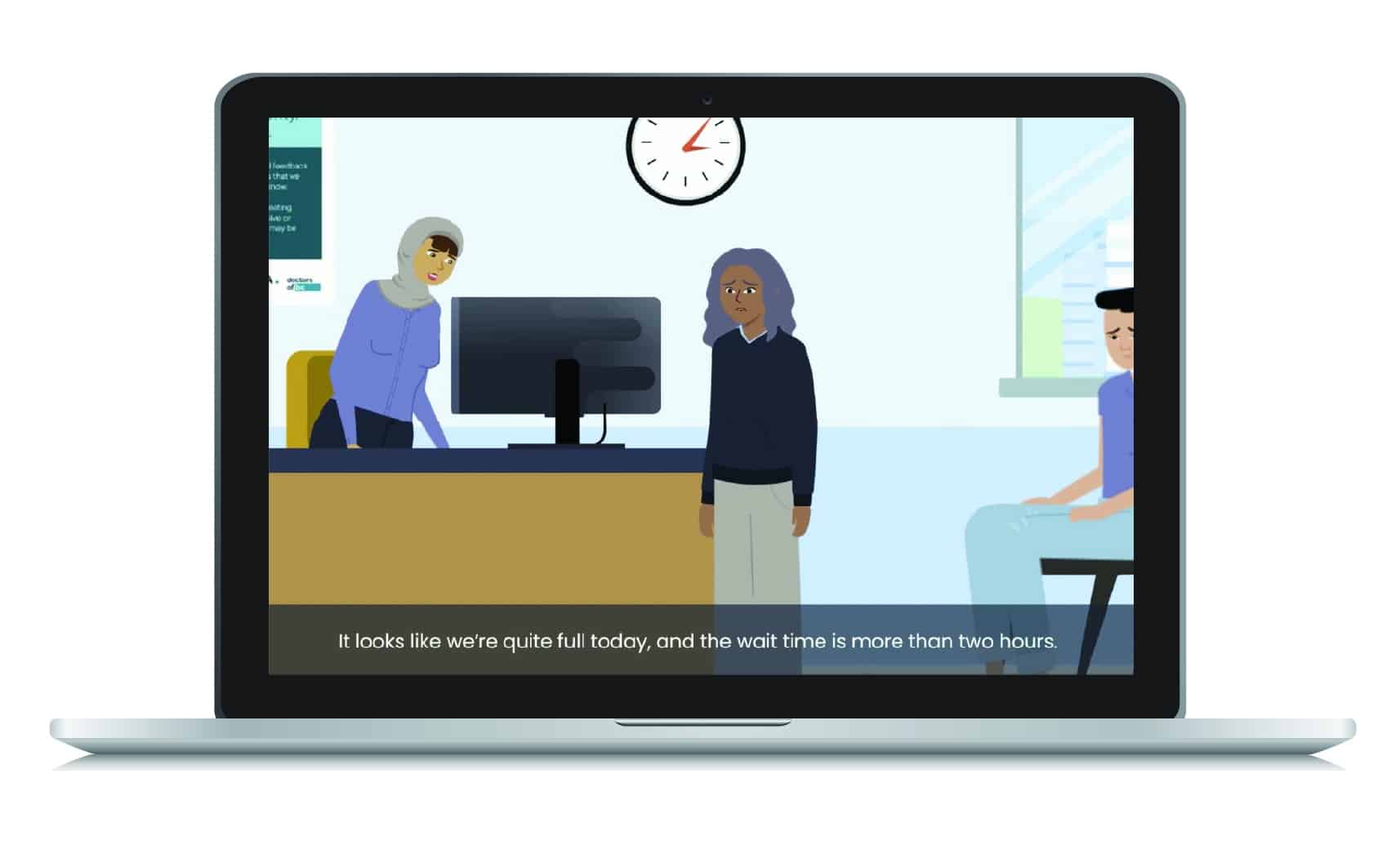
Clinic assessments remain a highly valued part of the CPHS program. In 2025-2026, CPHS advisors completed 66 clinic assessments, supporting 432 physicians and 510 medical office staff across B.C. — exceeding the annual goal of 60 assessments, reflecting strong clinic interest and need.
These voluntary and confidential assessments help clinics identify risks and improve safety practices, including incident response, risk management, emergency preparedness, staff training, and violence prevention.
Post-visit evaluations show 93% participant satisfaction, with physicians and staff reporting that assessments help them better understand and address gaps in their clinic health and safety programs.

Engagement and Training
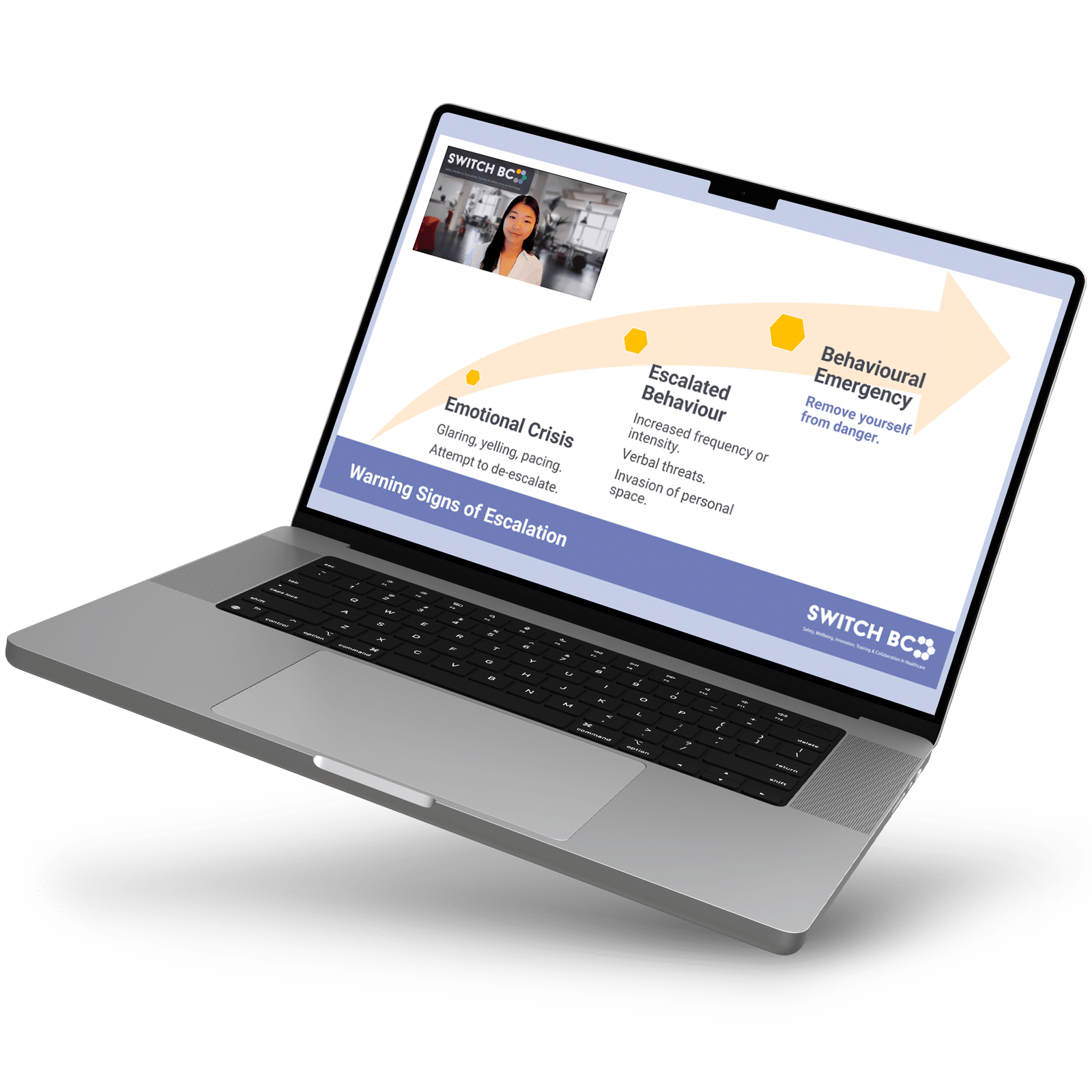
Community engagement is a key strength of the CPHS program. CPHS Advisors work directly with physicians, medical office staff, and students to share practical health and safety skills, tools, and resources to build confidence in managing workplace challenges.
In 2025-2026, program staff delivered guest lectures to 220 students at BCIT and Langara College. Students participated in scenario-based learning focused on managing challenging patient interactions and workplace health and safety risks. Feedback was very positive, with 93% of Langara College students and 89% of BCIT students indicating they would likely use the de-escalation tools in future workplace situations.
CPHS also continues to expand its reach through professional conferences, town halls, and physician practice networks. In total, program staff connected with 1,815 physicians and medical office staff through community events and professional gatherings.
CPHS presented at the 2025 Canadian Conference on Physician Health, where other provinces expressed strong interest in the program’s approach to supporting community physician and staff health and safety.
What's Next?
Future priorities include developing de-escalation tools for physicians, strengthening incident management support, and updating the web portal to make it easier to navigate and use. We will also develop a long-term evaluation of education and training initiatives and clinic assessments, and continue collaborating with physicians, medical office staff, and partners to ensure the program meets their needs.